Friday, November 14, 2014

Building a Base

Be The First To Comment
He takes his time, pondering the barbell on the rack.  Stalking around with an attempt at a self-assured swagger.  He pays meticulous attention to putting his belt.  He checks the tension carefully as he puts on his wrist wraps.  He chalks his hands up thoroughly so as to make sure that even the spaces between his fingers are dry and ready for the big lift.  He sets up the camera to catch the big moment.  Five minutes of preparation come down to this one, singular moment in the cage. 
 
ALL OF THIS WAS FOR A 120 LBS PRESS! 


Since I joined a gym, for the first time in nearly 14 years, I've seen such scenarios played out constantly by 20-something kids in between these walls with stunning regularity.  While I understand, and I try to keep in mind, that everyone starts somewhere, there's something missing in each of these over-suited up millenials struggling with baby-weights that I've seen grown women of average levels of fitness achieve.  It's what my buddy in the gym and I both agree on as we watch the above-mentioned man-child who wraps his wrists up for stability for the big push and follows up his press workout with pinch grip training lacks:  a complete lack of a base. 
 
He's not the first veteran lifter that I've heard complain that too many aspiring gym rats have no good training base anymore.  With the proliferation of the internet experts that read everything on Elite FTS and T-Nation but can't actually bring themselves to do a two-plate squat to proper depth, there's an ever-increasing pile of meat bags in nice gym clothing who are going to provide the fitness gym industry with a nice revenue stream of easy money.  They just don't get it and I think my buddy and I lament that at the rate they're going, they never will. 
 
So they need a base, but it got me thinking we chatted this up:  what exactly is a good base?  We threw a few ideas about the strength training horror-comedy show before us.  Still, it was an abbreviated conversation before we went our separate ways for the night. 
 
In the interest of making this constructive criticism (something tells me this person reads the blog and may be able to put together that I'm talking about him) since not trying to solve a problem while talking about it incessantly is nothing more than gossip, I decided to put my thoughts down as to what I think constitutes a good base for strength training. 
 
It isn't necessarily exercise selection...
Look up any article resembling building a good base for strength and I can almost guarantee you that you'll get some sort of list of exercises that are good for building a base of strength.  The problem is that most of these lists are lifts that I've almost never done on a regular basis since starting on this path almost a decade and a half ago.  Frankly, they're almost always competitive lifts for sports that I've never done and likely never will do.  Just because they're the basis of a strength sport doesn't make them the best base for all efforts to build strength.  There's a difference that's lost on lots of base-builders. 
 
Rather than rattle off specific exercises, I'd just rather simply leave it at making sure that you make sure to throw in some good pushing and pulling exercises, both for the upper body and lower body first and foremost.  Next, make sure there's some work for your midsection.  All of it (rectus abdominals, obliques, spinal erectors, and hip muscles).  Don't forget to get a dash of exercises that force your body to move rotationally.  Some carrying, dragging, and pulling of weights is also a remarkably good, simple-to-learn and easy way to build strength and conditioning. 
 
As long as you hit those categories up with some regularity, you should build a good beginner strength.  Don't think because I'm doing strongman and lifting weights more regularly that I believe that a good chunk of this can't be bodyweight.  I used BW-only for years and it got me to where I am now.  I wasn't doing specific events, I could easily be using handstand push-ups and pull-ups for strength training and get challenges out them. 
 
  ...But it is about doing as much of it as possible!
I've flat-out said that people take too much rest in between sets during workouts in a past entry.  That criticism also applies to our above-"lifter" taking five minutes to prepare for a tragically modest overhead press.  It shouldn't take that long BECAUSE HE SHOULDN'T NEED A LIFTING BELT AND WRIST WRAPS TO DO A PRESS LIKE THAT.  Since I'm too busy to determine if this was a max effort lift (I certainly hope it wasn't, this is not a small kid) I'll assume with such a modest amount of weight, it wasn't.  So, this stuff isn't helping make him stronger but allowing him to stay weak. 
 
Yes, support gear probably has it's place when approaching maximum strength lifts where the boundaries of the human body.  If properly used in conjunction with the body , it does help protect and strengthen during a lift.  Improperly used, it becomes a cast that does the work for the body.  If someone's building a base, then these implements have no use. 
 
While I abhor using high reps in bodyweight training in perpetuity, and I have for several years, I do admit that at the beginning, it definitely assisted in my ability to do more work.  The more work I could do, the closer I could get to maximum strength efforts without issues.  I have few doubts that all of my BW training helped may ability to handle large training volume, made my midsection (particularly my abdominals) powerful, bullet-proofed my shoulders and developed my grip. 

Ultimately, I think it's important to cultivate the ability to do a lot of work before doing a lot of maximum-effort work. 
 
One of my slices of broscience cake that I fed to the world years ago was that if you develop strong hips, shoulders and grip, you'll be a powerful person.  While I may not have done everything right in training to transition to strongman work (who does?) I do feel that since I had those three, combined with good work capacity, I was off to a good start.
 
Combined with HAVNG THE RIGHT FRAME OF MIND
Simply put:  too many people in the gym are just not comfortable with being uncomfortable.  That's why modern gyms look like they've been child-proofed by an OCD mother who just stole a foam padding truck.  The insistence with pristine skin isn't the only sign that people don't like to be uncomfortable in the gym.  The simple fact that our strength training-grasshopper  took five minutes to do a 120 lbs says it all.  He had no rush to get to lifting and he had no desire to push himself to lift with any sort of purpose.  Instead, bullshitting with others and playing compulsively with a phone were all so much more...comfortable. 
 
It takes time to adjust to forcing the body to do things that are intense and uncomfortable.  Still, that's what it takes to be good at training.  It also doesn't hurt if you learn to enjoy the process of training.  That's why I'm such a wing nut with my strength training movement selections.  I enjoy lifting weird objects in different ways.  As long as I do it with intensity and purpose, I still get strong.  Not everything has to be deadlift, bench and squat.  If you get strong while enjoying what you're doing, then who cares how you did it?  That will go a long way towards doing it with conviction. 

Of course, this all has to be combined with good food and rest.  Base building is pointless if those two parts aren't in order.  After all, at best, you may only have 45 minutes per day to devote to training.  While you can get a lot done in that time frame, it will be unraveled if the other 23 hours and 15 minutes of the day don't do something to support that other 3/4-hour. 

Hopefully this skull of mush gets his shit together and gets his training sorted out sooner or later.  Since this initial lift, I've offered whatever advice/words that I've seen relevant to him at key training times.  After all, without a solution to criticism, then it's all mean-girl-like complaining and gossip with gym clothing and body odor.  With a little luck,  these millenials will figure what a good base is all out. 


Wednesday, November 5, 2014

Got a Minute? Let's talk about timing and your training...

Be The First To Comment


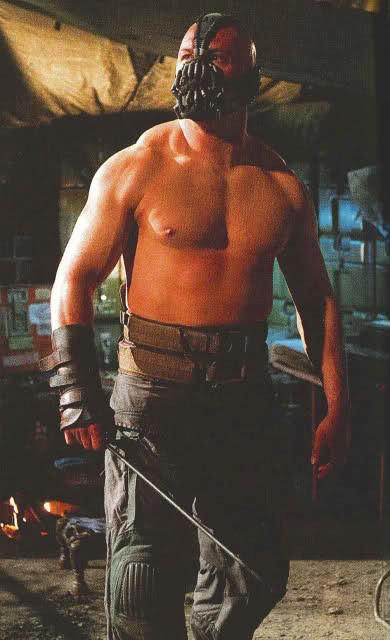
No, I'm not writing an article about how he got so big, especially since he hasn't told anyone how he did it...
For the readers who have seen both, "The Dark Knight," and the, "The Dark Knight Rises," I've got a question for you:  which of these movies was longer?  As a die-hard fan of anything that Christopher Nolan directs, I eagerly anticipated, and thoroughly adored, both movies.  However, I was baffled by one, common criticism of the last one:  the movie felt too long.  That question was a little bit of a trick question.  The Dark Knight Rises is only about ten minutes longer.  Christopher Nolan simply manipulated the timeline of events in the Dark Knight much more than the Dark Knight Rises.  So, since the story line wasn't being told in order, it seemed shorter than it really was. 

Christopher Nolan is widely regarded as a pioneer in movie making for his ability for juggling multiple timelines on film, making him a master at manipulating the feeling of time in movies.  That's a skill so few who try to build their bodies (rather than movies) seem good at. 

If anything, the sense of timing in training is totally screwed up.  People seem to have no idea when to rush and when to wait.  Patience is horribly mis-applied.  This poorly-manipulated use of rushing and patience is something that I see frequently screwing up routines in the short term and goals over a longer period of time.  While I will throw an Atlas stone at any reader who dares call me an expert, I think I've got my sense of timing down when it comes to my training.  I think it's about time someone sort this all out. 

Time Between Sets
This should be pretty simple but people love sticking their faces in the mud, opening their eyes, and looking for an answer:  rest as much as you need to and no more than that.  Maybe it's because people try to oversimplify, trying to find a rest period that's good for all movements.  The news flash for these people is that there isn't one.  You'll need more rest between maximum effort lifts. You'll use less for conditioning routines. You'll want to be a bit more generous on new movements so you can learn them rather than build strength out of them.  The less technical a movement usually requires less rest. 

Whatever you're doing or what you're looking to achieve out of it, just get enough rest out of the time between sets so you can do your next set.  No more than that.  If you need more than five minutes between sets you're either doing something that is far beyond your physical capabilities or you're just plain, fucking wasting your time by being lazy or unfocused.  Feelings of passing out and vomiting, or trying to make a joint work right after you did too much, are as much of a waste of time as chatting with other gym lazy-asses (like yourself) while posting selfies that nobody cares about to Instagram.  You're in the gym to move.  So, do whatever you can to keep yourself moving.  When you look to move as much as possible, you'll need some rest.  Take it since it's needed to keep yourself going.  Then go. 

Time to Reach Your Goals
In a short period of time, you're likely to hear an interview I did where I stress the overwhelming significance of being patient when reaching strength and fitness goals.  While I generally walk around my gym pushing millenials to get their asses moving and, you know, maybe exercise once every five minutes, I can't stand it when people are in a huge rush to become 500 lbs deadlifters, first place strongmen-competitors, or get 18" arms.  I agree that the majority of fitness and strength rules are pretty bendable.  One that I firmly believe isn't is that anything worthwhile transformation with your body will take time.  By time, I mean months and years.  Everything from fat loss to muscle and strength gain has to be done with the same amount of time you'll do in jail if you commit a felony. 

When I tried to gain some muscle mass seven years ago, it took me 9 months to put on 27 lbs of muscle.  I did it again this year and it took me six months to put on 15 lbs.  When I wanted to start bent pressing back in 2009, I started out with a 35 lbs kettlebell.  After five years, I'm started bent pressing a 150 lbs sandbag.  I had to wait nearly one year after I got it in my head to do my first strongman competition. 

If you look at the majority of the people who are telling  you that you can get results fast are either trying to sell you something or sell you on the notion that they are so much more awesome than you are.  Both are equally full of shit.  In between exercises, life is going on.  That alone is going to divert attention away from your goals.  You need time to learn how to do things right.  You need rest that you may not always get.  Then, there's the fact that a body will come up with reasons to resist changes in its current state.  You'll have to force yourself through all that. 

So, the takeaway from this is all pretty simple.  Make haste with your workouts and patiently wait for the results. 


Wednesday, October 29, 2014

Fall, get up, finish, learn something and don't forget to have some fun: Recapping my First Strongman Competition

Be The First To Comment
If I had to join a gym, I was at least going to join one that kind of matched my sprained personality along with my disgust of cardio equipment even if an exercise bike was what I was joining the gym for in the first place.  As part of my ACL physical therapy, I needed to ride an exercise bike, forwards and backwards, for 15-30 minutes a day.  While that's about as fun to me as drinking gasoline, it's PT.  I didn't have to like it.  I just had to do it.

The Dungeon Gym had three cardio machines and the rest is weights and strength training equipment.  That equipment line-up runs parallel to my training belief system.  You go there to lift.  Most of the crew there were getting into strongman training and that training, as I sadly peddled my knee back into use, rubbed off on me.  As I progressed in PT, the notion of joining my new crew of friends in strongman became a thought and goal that propelled me along with my training. 

After a year, I finally got the opportunity to achieve that goal.   Last Saturday, I did my first strongman competition in Tampa, Florida, taking 6th in the Novice Division. 
 
Over the past year, I've acquired a reputation for my unfiltered jokes and my wildly unconventional approach to strength training.  My cohorts in chalk and sweat shouldn't have been surprised that I'd rolled up in Clearwater sporting these sunglasses. That guy in the middle is my dear friend Richard. He's as conventional in the gym as I am crazy.  I was so overjoyed to be here with him.  I was overjoyed just to be here.  It's been a long, long struggle to get to a point where I felt like I could take my body to such a proving grounds.  While I wanted to do well, I was also here to have some fun.  In my typical, inappropriate fashion, that's what I was setting out to do.
 
Who need steroids when you eat these kind of sandwiches?

Training for this show had it's ups and downs.  One of the major downsides, naturally, was my lower body training.  My knee PT was generally successful save for one issue:  My left knee doesn't hyperextend like it supposed to.  So, my lifting with my lower body was slighty uneven, my right legs moving faster and working more than the left.  This eventually led to a carousel of lumbar disc irritation and issues an IT band tightness.  Plus, any movement that forced a lot of hamstring activation would leave my bad knee sore for the next day or so.  Long story made short:  my heavy squat work was minimal for much of the summer and I zeroed out on the Hummer Tire squat.


My friend, who was also competing, said it best:  shake it off, it didn't happen.  Move on!


Which I ended up doing with some success in the next event:  a car deadlift hold for time, head-to-head with another competitor.  That competitor turned out to be a guy named Bryan.  I ended up beating him by a grand total of .06 seconds.  The humor wasn't lost on either of us as we did the dude embrace after finishing.  While most of my leg training was suboptimal for months at a time, the one thing that worked really well was barbell hack squatting.  This movement that I regularly did was a pretty close approximation to a car deadlift.  In reality, a car deadlift is more of a squat anyway. 


I sprinted over to my lane.  Bryan looked at me like I was nuts. 
I wasn't too far behind him...
That .06 second difference basically turned Bryan and I into short term rivals.  We went head-to-head on the medley run (225 lbs farmers handles, 180 lbs yoke, 250 lbs power stair, 125 lbs dumbbell press, chain press).  Had I not been so amped up on nerve juice and anticipation for my favorite event to train, I might have taken note that one of the farmers handle kept rolling away from me.  At least I would have realized that the pavement on that side that I was about to step into had a slight depression right off the starting pads.  As soon as I took a step into it, I fell with the handles.  Other than a scrapped elbow and jamming the tip of my thumb, I got back to my feet and managed to catch up with Bryan a little bit. 

 That's when inexperience and nerve juice got the better of me. I exploded off the ground with the yoke, locking it out and steadying it with surprising ease.  Unfortunately, I missed the down command and kept moving.  I had to go back and do it. 

...Now I am


Nobody knew what to make of this.  Apparently, someone wanted to have me disqualified
I missed one.  Just not this one.  The crowd went nuts!


"you're a fast little shit!"  Bryan
Bryan later told me that he was stunned when he saw me just behind him on the dumbbell press.  He figured that my redo on the yoke press combined with the power stair would give him an advantage.  Unfortunately, that wasn't the case.  While we both missed our first attempts with the circus Dumbbell (Bryan has some elbow issues; my jammed thumb weakened my grip on the dumbbell), I pulled ahead, throwing the Crossfit-like chain press easily and again edging him out. 

The last event I figured to be my strongest event:  keg tossing over a 13' bar (Four Quarter-kegs.  20, 25, 30 and 35 lbs).  What I didn't figure was how good everyone else would be.  I threw just before Bryan, who I didn't realize was a Highland Games thrower.  He one-handed his way through those fuckers in just over 21 seconds. 

 I drilled the hell out of the throws.  I regularly did heavy T-handle swings, double Kettlebell swings, and throws with my Alpha Strong Sandbag (40 lbs).  I got off to a very hot start, throwing the first three kegs 3-4' over the bar in around 18 seconds.  However, inexperience got the better of me.  As I was throwing,  I stopped taking the two steps backwards to get into a good position to throw the keg.  By the time I got to the 35 lbs, I was throwing too far away and my last keg bounced off the pole, forcing me to redo the throw and coming away with a 26 second finish time.  


Initially, I heard that I had came in 4th place.  After a few days, when the scores were finally posted, I had to readjust to just missing the top three.  While I told myself that I just wanted to have some fun and simply being able to do this was reward unto itself, I'm still a competitive person.  I couldn't simply just go to participate.  There's a part of me that wanted to win, even if I was cognizant of the fact that it may be unlikely on my first competition since I was going in knowing that my squatting practice had been marginal and thoroughly sub-par (I also had tweaked my lower back the week of the competition.  I spent the entire week trying to get rid of the back pain, which I did succeed at). 
 
What was particularly galling about the tire squats was that I previously trained for these back in April for another show that I wasn't able to do in Florida, hitting 350 lbs for two, 385 lbs for one, and narrowly missing 405 lbs.  So, failing at 365 lbs proved that I lost leg strength in the course of six months.  Still, I've gotten in front of the IT band syndrome and hitting the hyperextensions served the dual purpose of helping get my left knee closer to natural hyperextension and strengthening my lower back muscles.  I trust that if I get my knee to do that, most of my back and IT problems will dissipate.
 
The rest of my errors I felt were a combination of inexperience and nerves.  I will never do a moving event without checking the surface I'm walking on first.  Ever.  That fall cost me both on the farmers handles and the circus dumbbell.  I also should have paid closer attention to my down calls.  Finally, I need to make sure that I take the needed two steps back on my keg tosses.  The winner of the novice division, Alex, also pointed out something I hadn't thought of:  after asking me if I knew I could clear the bar with my throws (which I knew I could) why watch and see if they were going to clear?  That could have shaved some time off too. 
 
Still, there were bright points to take note of:
  • I correctly surmised that a barbell hack squat was likely to be very similar to a car deadlift.  As a result, the car went up pretty easily. 
  • Getting the farmers handles were initially a problem for me in training since I did so little heavy deadlifting due to my back.  So, what I did do instead was practice lighter deficit deadlifts and deficit-deadlifts with chains.  As a result, I was able to get the handles off the ground and do it reasonably quick. 
  • Despite some problems with the yoke in training, I mastered squatting underneath it and pressing as I drove upwards.  This made my two yoke presses fast.  I also correctly surmised that regular squat-pressing would aid in this.
  • While my thumb screwed with my grip on the circus dumbbell press, I still nailed it.  I'd been practicing this for over a year and this one implement in the medley finished the medley for 4 of the 10 competitors. 
  • Inexplicably, I didn't meet anyone who used swings to training for throwing kegs. Someone must have! Lots of the competitors needed start the keg at eye level in order to get the extra momentum to get the keg over the bar.  After months of swinging 100-150 lbs of weights, I started most of my throws at my knees.  Even that may have been unnecessary. 
 

I suppose I can only be so hard on myself.  This picture is about 13 months old. 
 
So, after popping my strongman cherry after a year of conceiving of doing such a competition, I'm tentatively setting my sites on Florida's Strongest man in Davenport, FL.  Overall, this day will go down as one of the best in my life and I couldn't be happier to take part.  


Tuesday, October 21, 2014

Bench Pressing again...

Be The First To Comment
The comment about mastering the pushup will make you rival or surpass any body builder or power lifter is so stupid. If this were the case every body builder and power lifter would be doing pushups instead of lifting weights. Even Body builders and power lifters train quite differently from each other. One utilizing Rep range from 8 -15 the other rep range 1-6. This whole functional strength argument is stupid too, to say someone that lifts weights isn't functionally strong? How is a pushup any more functional? If your building a house, carrying a baby, or doing garden work dropping down and doing 20 isn't going to help any more than bench press. I'd wager that most people that workout do it to look better and feel better. If your goals are to just generally be in better shape sure go for the pushup. It's even challenging enough for most new people to build some decent size and strength, but if you want the earth to move when you walk, the ability to push trees over, and for people to make sculptures of your body you better stack on some weights. -Brent
That fateful post from nearly seven years ago now still draws views and comments to my blog...


Things have changed over those years.  While I do look back on some of my old posts and sometimes find my past self outright wrong on a few occasions, this post still stands up.  Much of what I think about the bench press vs. the push up hasn't really changed all of that much.  There might be a very good reason for that.  That reason is that, in a lot of ways, the bench press encapsulates much of what I don't like about the strength training subculture that I inhabit. 
 
First, the bench press needs very specific stuff to perform.  You have to have a bench, a barbell and plates, sometimes lots of them.  In other words, you have to have a gym set-up in order to do it.  So much of what I do is based on the premise that you don't need a gym to work out in the first place.  Benching anchors you to the gym if you insist on doing it.
 
There are lots of people insist on doing it.  As I've ventured into strongman training, I've noticed that lots of people migrate over to it from powerlifting.  Some strongmen, in turn, seem to take a shocking amount of programming tips from powerlifting.   What lots of people therefore don't get is that working the chest doesn't simply mean doing the bench press.  I've said it before:  the pectoral major muscles are extremely versatile.  Any movement that requires moving your arms in front of your body back towards your centerline is using them.  So, you don't need to be glued to one movement that, in turn, glues you to the gym.  Since I have an aversion to being intentionally stuck to a physical location to train, you can bet your ass I have a problem being married to one movement, especially one that I hate that's part of a competition of have no desire to participate.
 
Frankly, there is NO GOOD REASON to be so glued to the bench press.  It's an incomplete upper body-push movement anyway.  If done by itself, it doesn't develop the shoulder and chest muscles in a balanced manner.  Push-ups can and do, which is why I prefer them (weighted these days).  One thing that some strongmen do get right is they move the bench press to an accessory movement to the overhead press.  There are a mess of chest exercises out there any why the more incomplete ones got selected as the go-to for chest training just boggles my mind. 
 
To top it all off, as I said above,  I just don't really enjoy bench pressing.  I don't really have a rhyme or reason for that other than it just isn't a compelling lift for me.  So, since I don't enjoy then why should I do it?  After all, it's not a lift in any competition that I'll ever do.  I can do others to get  complete upper body development.  Plus, I don't need to be at a gym that, aside from the past two years, I have extremely limited access to.  At the end of the day, there are more practical lifts for me to consume my time with.  I'll just stick to those. 


Wednesday, September 10, 2014

Check your special shoes at the door and get your head right

Be The First To Comment
I should have been finishing up dead-last in the group, looking like a pasty weakling.   At 195 lbs, minimal direct strongman training experience, only two months of regular leg training, and a pair of totally gripless Chuck Taylor shoes I shouldn't have been doing much to write home about with a 12,000 lbs truck pull.  This was my second time ever attempting one...

While my technique was as ugly as I am stunningly handsome, on my second pull I tugged out the second best time of the day out of the group.  I ended up beating one of my best buddies at the gym by two seconds.  With his extra 30 lbs of extra weight, more strongman training experience, and a brand new set of rock climbing shoes to that savvy strongmen competitors utilize on truck pulling he should have left buried me. 

Questions about what shoes to use with what kind of lifting and training seem to come up as often as Kardashians show up in the public consciousness.  Like the Kardashians, as far as I'm concerned, they pop up far, FAR too often.  This has to be part of a larger marketing conspiracy that exploded way back in the 1980's when Nike teamed up with Michael Jordon and created the illusion that somehow shoes were the key to peak athletic performance.  Strength training chicanery simply must have followed suit. 

I mostly train with Chuck Taylors for two key reasons:  they're cheap and they're what I have.  With my limited funds and my near-constant traveling, I'm forced into strength training minimalism largely by necessity.  That has drawbacks that I largely don't mind.  Just like growing up poor teaches you more about living life than growing up privileged, training with nothing will teach force someone to make more out of less. 

As we were all playing around with pulling a truck, many of the guys in the group struggled with driving with their legs because they were up too far on their toes.  I explained to everyone that they need to think of their feet like their hands and get a good grip on the ground by making sure that with each step by planting as much of their foot on the ground (balls and toes of the foot) with each step.

Ever heard of chip-coated pavement?  It's pretty much gravel with not enough tar to call it real asphalt.  In other words, it's a little loose.  That's what I was pushing this truck on.  Either I get my footing right or put my teeth into the bumper when I slip!
 
I learned this from pushing work trucks in lousy driveways...wearing my Chucks.  Push heavy weights on such an unforgivingly-loose surface with a shoe that has does you no favors will force you to plant your feet one way:  the right way.  What would rock climbing shoes have done to fix that? 
I'm not completely slamming specialized shoes, or anything else for that matter in aiding weight training.  Where I in a competition and I had the means to buy a special pair of shoe for every event to maximize my chances of winning, I'd certainly do it!

Your work-out gear doesn't make you strong.  It didn't make Michael Jordon one of the most legendary athletes of all time and it won't make you fantastically strong.  Your head and your body are responsible for that.  If you don't have those two things in check then the only thing that your shoes buy you is credit card debt. 

SO TRAIN AND STOP WORRYING ABOUT SHIT THAT DOESN'T MATTER.
    

Friday, August 22, 2014

Old Man Strength Training

Be The First To Comment
OK....this also applies to "old women" but I thought the title was catchier that way.  Here is the deal; most trainers get this terribly wrong.  By wrong I mean that their focus is 180 degrees out, exactly opposite of what it should be.  And this concept also applies to middle age trainees (like me).  Trainers and the major certifying agencies often get the programming backwards.  Their focus is wrong, and as a result, they deliver much less than they should.  Let's explore the issue a bit more.

Coach Dan John likes to say that strength training is loaded movement.  There are basically 5 different fundamental human movements: push, pull, squat, hip hinge, and core/carry.  Of course there are other movements, but these are the fundamental ones that form the basis of most athletic movements.  They simply must be addressed in your training program or it is incomplete at best. Again, strength training is loaded movement.  Load and movement (along with volume) are the major variables that are manipulated in designing a strength training program.

Young people spend lots of time running, jumping, tumbling, climbing trees, jumping over fences, wrestling, playing sports ............ moving.  Active young people rarely have a movement deficit.  I think you will agree that in general, young people move better than older people.  They may not be strong, or even fit, but they can move.

As we get older, we don't do that stuff anymore.  If you are 40+, when was the last time you climbed a tree or hopped over a fence?  Your movement ability is not what it used to be.  This is partly why recreational sports are so dangerous for 30 somethings.  They are young enough to feel invincible, and to remember participating vigorously, but they have already lost some movement capability.

Which brings up a simple concept.  Programming for younger trainees should focus on loading, with simple, basic movements.  Of course, movement quality is always important!  However, it is OK to use some machines to increase loading.  However, for older adults, the focus should always be on movement.  Movement is more important than loading!

Consider the exercise below.  This is a seated overhead press.  This is the kind of exercise that is often used with older adults. It is used because it is "safer" than the free weight version.

Here is the problem, all of the "movement" work is done by the machine.  It is completely stabilized, with the movement path fixed.  This removes all of the stability work, which is the most critical part for older adults!  The legs are completely relaxed, the core does not really need to be engaged.  Really, only the few muscles that are necessary to move the device along the fixed path are engaged.  However, because the movement path is fixed, with little chance of deviation or error, it is safer to load heavy.  That is why it is often used with older adults.  Again, this is backwards.  It is sacrificing movement for loading.  

Take a look at the exercise below.  This is a very "movement" focused exercise.  It is a movement based version of the exercise above.  Every muscle in the body is engaged from the muscles in your fingers to your toes.  The core is locked down, the neck and traps are stabilizing the upper spine and shoulder blades.  The lumbar stabilizers, glutes and hip flexors are stabilizing the trunk and hips.  The legs are working to provide a strong base.  


But, many trainers will object,"That exercise is not safe for older adults!"  Wrong.  It is not safe if the loading is too heavy.  They may have to start unloaded!  That is OK.  Strength training is loaded movement.  We don't sacrifice movement for loading, especially in older adults.  Instead of prescribing exercises that help to restore functional movement, they often prescribe exercises like in the top picture (seated machine press).  They emphasize loading over movement by having the older client do 5-6 exercise machines.  

Instead, how about having an older client practice getting up off the floor instead (i.e., Turkish get ups, even without a load)?  Maybe lift something off the floor and even press it overhead.  It does not have to be heavy, yet.  Instead of a machine bench press, how about a push up?  Even if it is a knee pushup the core will still be engaged.  What about a bodyweight squat instead of a machine leg press? Even if it is not a full squat initially, or they have to deload a bit by holding on to something (i.e. TRX), it is a more of a functional movement than the leg press and is plenty safe if loading is appropriate.  

There are lots of simple programs that fit this template:


How about a version of the "Program Minimum"

Monday - Swings
Tuesday - Getups
Wednesday - Pushups
Thursday - Swings
Friday - Getups
Saturday or Sunday - Pushups

Or maybe something like:

Monday/Thursday: Pushups, body rows
Tuesday/Friday: Goblet squats, Bulgarian goat belly swings

Or perhaps for a middle aged client:

Warm up: Turkish Getups, then: Pull-ups, dips, goblet squats, kettlebell swings

For an older adult, a program of nothing but Turkish Getups (starting unloaded and progressing to loaded as able) could be a life changer.  In fact, for a middle aged adult, try working up to a 1/2 bodyweight Turkish Getup!  If that is all you did, and you reached that goal, you would be a strong and capable human being!

Some parting thoughts.  Doing some work on the ground is good.  Any exercise that requires you to get off of the floor is going to be of benefit.  Carry some stuff for distance.  Training to pick things up off the floor is important. You are going to have to do that every day in real life anyway.  Press things overhead.  Most exercises should be done while supporting your own weight, and not sitting or lying down.  Keep it simple! Focus on improving movement quality first, and loading second.  Never sacrifice movement quality for loading.


Saturday, August 16, 2014

NAVY WRESTLING TRAINING

Be The First To Comment


Go Navy beat Army!  Motivating clip from Navy Wrestling.
 

© 2015 Strength Training Program - Designed by Mukund | ToS | Privacy Policy | Sitemap

Hide
X