Saturday, June 22, 2013

Shooting my mouth off: because I can't shoot members of the AMA either

Be The First To Comment
Hopefully, our collective heart rate elevated at the same time our gag reflexes were tested to their limits when the AMA stepped out of its collective mind and declared that obesity is actually a disease.  My strength-and-health page-heavy Facebook Feed exploded with debates about this decision.  Some of us thought it was a wise decision by the official definition of a disease.  Others saw this as a massive smack in the face of good sense and a major win for lazy stupidity. 

If you happen to be one of the former and won't be dissuaded that obesity is a disease, please feel free to immediately stop reading by blog, find a thick and long object, and swallow it sideways...
For those who stuck around to listen to me on my modest, cyber-podium, let's throw one thing up on the screen right about now:  The definition of a disease.  After all, just about every proponent of this change of heart by AMA has sighted this definition.  So, let's start clearing the air with what I found here:
  disease /dis·ease/ (dĭ-zēz´) any deviation from or interruption of the normal structure or function of any body part, organ, or system that is manifested by a characteristic set of symptoms and signs and whose etiology, pathology, and prognosis may be known or unknown. See also entries under syndrome.
So, the nuanced, bleeding-heart, sensitive, brain-dead, senseless, show-me-your-medical-qualifications-Justin-Paul AMA supporters will happily point out that since being fat causes a laundry list of diseases it fits the definition of a disease itself.  So, I'll pull my free-thinking mind out and sit on for just a second.  Let's say that getting fat/obesity is a disease.  So, how do we treat it?  How do we stop the body from getting fat? 

That's why we haven't seen an effective diet drug pill to prevent getting fat yet.  When we eat (too much, in this case), we provoke a lot of hormonal reactions that can trigger weight gain.  Insulin, cortisol, and leptin are three that jump to the top of the list. They aren't the only ones though.  Testosterone and estrogen alike, if they're not at the right levels, can trigger weight gain.   That's just five hormones that can affect whether or not you get fat.  The reason why an effective and safe diet-in-a-pill hasn't been created yet is that while one hormone can be manipulated to stop fat gain, all of the others can step in make you fat.  Trying to control of them with drugs is difficult...and dangerous. 

There's something that too many people miss when they talk about obesity as a disease in the following explanation:  if there are several different hormones that your body produces that can make you fat, isn't therefore getting fat when you eat too much a normal body reaction?  That, of course, is a resounding...
YES!

There is nothing...NOTHING!!!... deviating or interrupted when you eat too much and you get fat in your body's system.  That is what your body is meant to do.  Just because being too fat can make you prone to disease doesn't make it a disease itself.  That is what is so horribly fucking stupid about this vote is that normal, bodily function is now considered a disease.  By that rationality, there are a host of other normal things the body does that could be considered a disease. 

  • The most obvious that comes to my mind is getting a tan or being tanned.  Excessive tanning can cause skin cancer.  The body's normal reaction to exposure to UV rays is to darken the skin.  There is normal and not deviating from normal function of the skin when it tans.  If it's done too often and for too long, it can cause a disease.  Is a tan disease now because having a tan carries the potential for skin cancer? 

  • Or what about being horny?   If you have sex, you can certainly get a lot of tasty and wonderful diseases from that too.  Is the desire to fuck a lot a sign of a diseased body since you can get AIDS on your herpes from sex?

  • I suppose you could make the case that having big muscles is a disease too.  The things we have to do to thicken up our bodies with muscle mass carries the possibility of disrupting normal body functions.   
Yes, this is all ridiculous but no more ridiculous than the doctor's union (let's not kid ourselves, the American Medical Association is nothing more, at its core, than a doctor's union) just did.  In continuation with the notion of not kidding ourselves, let's just be blunt and realize that for decades, most doctors didn't have enough of a clue about how to treat a human body unless it involved drugs.  Around the early 1900's, doctors used to tell people that weight training could bind up the joints, causing them to stop moving and that exercise would use up all of the beats that the human heart is capable of producing in its lifetime prematurely.  Things haven't improved with this vote to call getting fat a disorder.  

Of course, this is all very convenient for the overwhelming majority of the population of the USA and the drug manufacturers that service this pile of fat citizenry.  They won't take the notion that a genuine fat-loss medication is dangerous to pursue lying down and the people that will buy it want no disturbance in their lying down time.  The AMA may have just made a two groups of people incredibly happy with this vote. 

Maybe we should declare laziness and stupidity diseases.
Wednesday, June 19, 2013

Training around my Bad Knee

Be The First To Comment
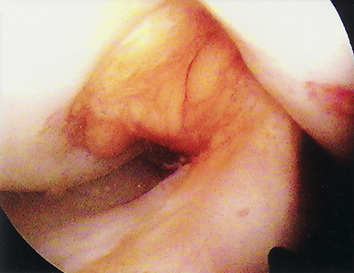
So, here I am:  I've got a torn ACL in a left knee along with a hairline tear in my meniscus and bone bruises.  It's still swollen too much to straighten, several weeks after I fell at work.  I've been on crutches since then and I watch my left quadriceps shrivel into a straw from lack of use.   That's been particularly distressing considering how much time I spent awake at 5:00 am so I could push my pick-up truck on the road where I reside lately.  In other words, it's been nearly a month and a half of nearly unmitigated suck as I've tried to maintain some semblance of a normal life. 
Kind of looks like a meat donut.  Whatever...it royally sucks!
Relevant to why you're here:  my training has changed radically.  Basically, I can't (or should I say shouldn't?) train my legs, lower back and do much in the way of abdominal work either.  Failure to adhere to these rules will either cause my knee to make these disturbing clicking noises, pain, or the sensation that my knee will collapse on me  Prior to this hideous set-back, I trained like the proud primate that I am.  I did as much standing  or hanging from something as I could, avoiding almost everything sitting or lying down like it was the scourge of humanity.   Clearly, I've had to adjust. 

Now I've had to do what I've spent years avoiding:  training like a dog.  I have to sit or lay down a lot more if I have any expectations of maintaining a (somewhat) daily regimen of sweat and pain.  I could just play dead and not train.   Yeah, that's not really my style. After all, it's just one leg that's screwed up.  So what if I can't squat?  I've still got my upper body intact.  That was what I thought after the first week of living on the couch while trying to rest my knee. I figured I could attack my weights with some of my original enthusiasm for muscular awareness via pain and suffering. 

That was a mistake.  After doubling up on what I planned on doing at the beginning of the workout, I could barely keep myself upright and moving on crutches.  I learned from that experience.  I have to try to leave something in the tank so I can at least move around afterwards.  After all, my upper body has to move the rest of me for the forseeable future and going too hard makes me move like a drunk afterwards.

Note to myself:  Don't get drunk when I'm still on crutches.  It'll make me move like I've done too much pressing. 

One issue with weights is that I can't use very imposing quantities of weight since I have to be mindful about how I can get it into position.  So, I am left with figuring out how to find stuff I can do that provides a challenge without a big chunk of weight.  So, I have to do mostly upper body stuff and embrace the concept of not going 115.625%.   So, what have I been doing?

Al Kavadlo has a good explanation of  this movement same place I scrounged this picture
 For some reason, when this all happened, Lat pullovers jumped into my head.  That struck me as a pretty comprehensive movement that I could do on the ground with a  kettlebell.  The pullover seems to be poised to make a comeback in popularity since I've been seeing people mention it a bit more here and there.  The pullover used to be an incredibly popular move back in the turn of the 20th century for weight trainers to get a barbell off the ground and into a position where they could do the equally-forgotten floor press.  Obviously, the rise in the popularity of the bench press prompted a receeding interest in the pullover, despite the fact that Frank Zane used this move religiously with legendary results.

Another that I thought of was a press variation that Zydrunas Savikas allegedly does where he sits down with this legs straight in front of him.  I had to modify that just a bit since I can't straighten my left leg even on the ground, but it worked out just the same.  I just put my larger sandbag under both my knees and press my smaller sandbag for higher reps.  The legs in front positioning makes smaller weights feel bigger than they are.  In other words, its a press variation that will wash the douchebag out of your system.  It's also good for getting rid of that bad habit of leaning back to get the weight overhead.  Getting your upper body more parallel to the ground will always make a press easier but it's not always spine-friendly.  Try that with this press variation and you'll end up flat on your back.

Bodyweight's a little different these days too.  Kewl trainer and gym owner Chip told me that I'd end up becoming a pull-up junkie with my leg being bad. He doesn't seem to have been wrong either.  Although I've shied away from going high volume.  I've re-examined oddball variations of pull-ups that limit me to moderate volume.  
  1. Typewriter/around the world pull-ups aka the most humiliating pull-up I attempt to do.  These are the ones that once getting to the top of the bar, you shift your bodyweight from one arm, over to the other, back to the middle, and down. 
  2. Swinger pull-ups...or the reason why I've torn every callus on my hands at least twice.  This is a dandy if you want to test grip strength on a regular thickness pull-up bar.  At the bottom of the pull-up, let go with one hand and hang there (or swing around if you want to) for a second before grabbing the bar, pulling up, and repeating the process with the other hand.  The only drawback is the sacrifices to the callus Gods that I make when I do this one.  Still, it's as much fun as it is brutal on the grip.
  3. Or, just a plain vanilla close-grip pull-up, slowing down the upwards pull, holding for a second at the top, then repeating the process. 
Regardless of which I do, I end up super-setting them with straight bar dips.  After all, the park where I'm set up working has a pull-up bar and then another bar next to it, lower to the ground.  I figured it was a natural for such a dip variation.  Besides, before this all went down, I had progressed to getting two muscle-ups in a row with a modest, non-Crossfit kip.  Clearly kipping is out of the question now but I figured straight bar dips might help me hold onto my muscle-up capabilities.  Time will tell. 
Another Al pic to the rescue...
I've tried to throw in a lot of work on my upper back and shoulders.  It's not simply because it's a part of my body that I can train without consequence to my knee.  I noticed that its almost unavoidable to not spend a lot of time leaning over in a slouched manner when you've got crutches.  So, I figured that this would help a little with my posture. 

Which brings me to something else that I wish had been explained to me in the hospital when I got my crutches:  how to adjust them properly!  If you ever find yourself in my position, never rest crutches in your armpits!  The pad are meant to be just below, around where lat begins to flare out.  So, adjust to that height.  Pinch that between your torso and your arms.  The handles should be adjusted so they are at the junction of the wrist and hands when your arms are at your sides.  If you spend any amount of time moving with crutches, do yourself a favor and thicken the handles up.  I used athletic tape on mine.  You can buy extra pads too for this purpose.

Overall, this all sucks and I eagerly await my surgery.  Life has to be adjusted accordingly and I spend a lot of time thinking about what I'm going to do before I have to do it since I don't move so well right now.   My training has followed suit.  It's not what I want to do but it's what I can do and I'm going to make the most of it.

    Sunday, June 2, 2013

    Hey, I just realized that I haven't chimed in about prison workouts yet...

    Be The First To Comment
    It's positively amazing how much working out in a place that most of us haven't been, nor want to go,  has become so unbelievable popular in the past seven years.  You can't visit a forum, buy fitness books, or avoid a web site about prison workouts.  Even I've contributed to this, lending some of my fingertip push-up pictures to Convict Conditioning 2 (which, in my opinion, is more than enough reason to buy the book but maybe I'm biased). 

    Full disclosure:  I've never been to prison, just like most of the people writing about prison workouts.  I do have some perspective on the topic.  Somehow, I've got  knack for befriending prison guards and ex-convicts alike.  My brother in-law is prison guard, as well as two good friends also work in corrections.  I've got one good friend and had at least five ex-employees that have done time in jail.   They all know that I'm a basement gorilla so we've all talked about working out.  This is what I've learned about working out in jail from them. 

    First of all, just about ALL prisoners work out.  Very rarely do they get as huge and as intimidating as Charles Bronson is.  It's a way to pass the time.  Most of them do push-ups and crunches.  Lots of them.  So many, in fact, that they swear off crunches and push-ups when they get out.  Chances are if they weren't big into working out before they went to jail, they won't be big into it after jail.  Their level of sophistication with bodyweight training hinges on this fact.  One of the guys I used to work who spent too much time in and out of jail couldn't even do a pull-up. 

    How big guys get in jail from working out is exactly the same as how big you get working out outside of jail:  how much food you eat.  It's not so simple to get surplus food in jail.  One of those guys who spent time in jail that I used to work with worked in the kitchen.  According to him, it was the most sought-after job in jail.  He gained 20 lbs in jail because he had access to extra food.  He was fond of training with 5 gallon pails, left over from the kitchen,  loaded with water or sand to work out.  He did a lot of shrugs, high pulls, curls, and farmers walking with pails. 

    A prison guard friend of mine told me about another novel way that prisoners get extra food:  they trade it for blowjobs.  I thought he was joking.  He wasn't.  They can tell when they do a search of a con's cell and they find a bunch of extra food that they're not supposed to have and couldn't afford to buy.  If they don't cause trouble, then they get to keep it.  Awfully nice of them since they don't call it a job for no reason. 
     Worth swallowing cum for?  Yeah, prison sucks. 
    Getting back to the exercise thing, just about every ex-con I ever knew had one thing in common:  prison training left them with the prototypical massive upper body with the tiny chicken legs.  The reason was explained by two different ex-employees where I work.  In jail, they spend a lot of time shirtless.  Having a massive upper body is key to showing that you're not one to be messed with.  It's also the reason why they get tattoos on their chest.  One guy told me that if you see a guy with a sloppy, obviously free-handed tattoo on their chest, chances are good that they spent time in jail.   So there is a heavily lopsided focus on the arms, chest and shoulders.  Some will even go to the extent of pumping themselves up before going out to the prison yard to look more intimidating.
    Access to equipment is inconsistent and scattered.  It's not common for most prisons to have those beautiful, full equipped and furnished gyms that people complain about when they say that prison is getting too cushy these days.  Gym equipment is an unnecessary expense to a government agency that doesn't often get a lot of disposable budget money to work with.  From what I've heard, a lot of the equipment that ends up in jails is simply the stuff that commercial gyms are just trying to get rid of after they upgrade their equipment.  They'll simply donate it.  That's what ends up in jail:  the stuff you don't want to use anymore. 

    While it's not considered a necessary budget item by prison bureau bean counters, the guards doing the dirty work generally like having gym equipment for the prisoners to use.  The same guy that told me about the entrepreneurial jail house food traders also introduced me to an interesting term: behavioral modification tools.   Basically, the guards use access to the gym as a reward for prisoners behaving themselves.  If they're good, then they get to use the gym.  This was about the time that he told me what all of my friends in corrections tell me:  when you're a prison guard, you're largely a glorified baby sitter. 

    I had to ask if there was any truth to the whole notion of guards getting worried that prisoners work out to the point where they get too powerful to effectively control.  As it turned out, that was another myth.  As I said above, most guys who are huge in jail were huge outside of jail.  It was explained to me that con-control wasn't done with one guard trying to subdue one inmate.  It's usually several guards subduing one unruly inmate and few prisoners ever get strong enough to overpower five guards with batons and pepper spray. 

    This is about the extent of what I know about working out in jail and unless I hear it second hand, that's all I'll ever find out about the topic.  While it's interesting to find out the extent that people with little access to so much of the stuff the modern fitness world considers necessary to get in shape can develop themselves, I'm not in a burning rush to emulate everything they do these days in jail.  Based on what I've gleaned from talking about prison work outs, it's an awful lot like just about every other strength click:  they do some things right and do other things wrong.  The minimalism is the take-away from their training.  You really don't need much to get strong. 


    Friday, May 31, 2013

    The Homemade 'Shop' Gym

    Be The First To Comment
    Awesome Homemade Gym I thought you'd like!

    Awesome Homemade Gym

    Saturday, May 18, 2013

    Shooting My Mouth Off: Youtube-internet judge edition!

    Be The First To Comment
    The pain killers must really be kicking in.  Or, maybe sleeping and living on a couch for days in essentially one position is starting to get on my nerves.  Whatever it is, I feel a strange compulsion to let my inner asshole out and figuratively wear a shirt that I've long avoided...
    
    This is a real T-shirt...and get it here!
     
    Maybe it's because I'd kick a loved one upside the head just to be able to get back to bent pressing, hack squatting, or at least some truck pushing.  I love to move...not some pointless flailing but with some sense of control and purpose.  I blew my knee out from lack of control (missed a step).  I don't see the point in doing a movement, BW or with a heavy object, with the intent of just getting it done at all cost.  The whole point, as far as I'm concerned, is to get stronger from the move.  You don't get stronger if you get hurt.  You don't get stronger by taking shortcuts just for the sake of getting the  move done. 

    So it only makes sense when I see someone picking up something way too heavy, with their body simultaneously convulsing like they're being electrocuted and bending like an overloaded beer trailer at a Cinco De Mayo party, I'm not really that impressed.  In fact, just downright hideous.  Lifting like that isn't impressive and I'll tell you why.  There's such a thing known as absolute strength and that's using 100% of your muscles.  At any given time, you barely use a third of your power, even if you think you're using it all.  Your mind blocks most of the power subconsciously because it's for emergency use only.  Your tendons and ligaments probably won't hold up to that kind of contractile force.  If your mind senses a life or death situation, then it'll kick in.  After all, what good are in tact connective tissue on a corpse? 
     
    So, in other words, your lifting past sensible physical limitations is both stupid (you're wrecking yourself)  and half-assed (you're still a mental midget because you can't harness your full muscular power) at the same time.  Nobody really admires someone lifting in such cartoonish mannerisms anyway.  What's impressive is lifting big shit and making it look like it's not that big. 

    So, I've established that I'm no fan of lifting grotesquely past physical limitations.  I'm also not always a of a fan of modifying equipment to make lifting easier simply for the sake of moving more weight.  What I'm getting with this statement is some of the sandbag lifts I've seen.  Since I bought my Alpha Strong Sandbags two years ago, a day rarely goes by when I don't use either Thy Beast or, more recently, Thy Kraken.  Implicit in sandbag training is that the sand can shift with each lift, creating an awkward weight that isn't exactly the same each time you pick it up and put it down.  That movement is the cornerstone of sandbag training.  So, it baffles my mind to see people filling sandbags to the point where they are rigid and, even worse, finding a way to tie them up so the sand barely shifts at all.  
     
    ...I had a specific video in mind of an an Xpurt doing exactly this but it won't upload!  Shit!
     
    
    I learned quickly that I had to learn how to do a clean if I wanted to get serious about training with sandbags.  I'd never done a barbell clean previously.  When I got around to doing one, with 135 lbs, I was surprised that it was much easier than cleaning my 87 lbs sandbag.  That's how much difference a shifting weight can make.   Sandbags aren't simply about how much they weigh.  It's about how much more they fight back when we attempt to lift them. 

    In case you're wondering if I still do BW and if I still write about it yet then the answer is still yes to both and I've got some major peeves about what passes as rope climbing in some circles.   Unless you're Czech, there probably isn't any organized rope climbing competitions unless it's part of an obstacle course.  If there was one that I started, the goal would be to get up it as fast as possible, not counting the descent speed for anything.  The reason should be self-explanatory:  too easy to let gravity do the work for you.    That should count as much for rope climbing as a six-pack counts on a skinny guy. 
    So, naturally, it drives me nuts to see someone climb a rope and then do some sort of controlled crash downwards, and then recording how fast they can go for the whole damn thing.  If there's no rope climbing competition federation, then it doesn't matter how fast you do the whole thing.  Fast therefore shouldn't be the point.  Once again, the point should be to get as strong as possible from climbing the rope.  To get the most out of the experience, go up fast and down slower. 

    Maybe that's why I have a certain aversion to what competitive lifters of all stripes do for training.  The way I see it, it's all ass-backwards.  They all do different lifts but they all have the same thing in common:  they want to lift as much weight as possible with a few, chosen moves.  They define strength too narrowly.  When goals around movement become too focused, the mind looks for shortcuts.  These shortcuts always have a way of loosing the purpose of the exercise in the first place.  Perhaps this is more apparent to me as I watch my left thigh atrophy from weeks of being nothing more than a few dozen pounds of deadweight and my frustrated mind aches for physical stimulation beyond hobbling around on crutches. 

    Yes, I'm currently reduced to being an internet couch judge.  If you're not, then for fucks sake don't take for granted that you can move, lift and climb.  Don't waste that ability on short-cuts.  

    Or maybe I'm an asshole like the rest of them...

    Thursday, May 16, 2013

    Homemade Stepper - Step Machine Required

    Be The First To Comment
    I've been looking around the net for a Homemade Step Machine plan and so far have not found anything worth looking at!

    One idea was to glue some phone books together and then throw a towel over(this was promoted as a 'Homemade Step Machine')

    I have an idea that would use a frame and some of my Iron Woody stretch bands although I haven't put this together yet

    So if anyone has a good idea or can direct me to some plans I'd be very grateful Just drop me a comment

    Otherwise it looks like I'm on my good old DIY Exercise Box

    Friday, May 3, 2013

    Objectively: What was awesome about the old school...and what kind of sucked!

    Be The First To Comment
    Chances are pretty good that if you're reading this blog then you're just like me that you have a greater appreciation for the way that people strength trained 70+ years ago far more than the way that they trained now.  You're still in good company here since I agree that strength training of yesteryear was far more fun in its crude, rusty glory than today's highly sterilized, over-chromed class heavy health clubs.  There's just no comparison in my book.   It's important to keep in mind that while you will get no disagreement from me that things were better then than they are now, it wasn't perfect by any stretch of anyone's imagination.  There were some serious issues that we need to keep in mind when we look backwards to look at what direction we should move forwards.  Meanwhile, while we all generally in the latent superiority of the old days, it's odd how few people can articulate why they like those old days so much. 

    I hope to shed some light on what made the Old School so good...and what should have been corrected, based on my observations. 

    The BAD... Dude, where's my squat? 
    One thing that leaps out at anyone who goes from "new" school to "old" school is how the now-ubiquitous squat was so often M.I.A from so many strength training literature.  It doesn't pop up much until the late 1920's and early 1930's.  The most notable mention of the squat I heard before was from Bert Asirati and Henry Steinborn in the 1920's.  Despite it's overwhelming acceptance as a necessary strength training movement now, it's still got a few detractors that consider it a knee-wrecker.  How did this whole thing happen? 

    I've seen some pictures in various training sources that may shed some light on what was wrong then and how it still haunts the ignorant about the squat now.  One involved an old picture demonstrating how to Hack Squat.  I'm sure that my readers are well-aware of the fact that Hack Squats started out as a barbell movement which the iron game history credits the great George Hackenschmidt with developing...NOT A MACHINE-BASED MOVEMENT!  

    Slap yourself if you didn't know that.  Then you can continue reading...

    Back then, the squat was also known as the deep knee bend.    Nowadays we're advised to think of squatting less like a knee movement and more along the lines of a, "hips back, chest proud", movement.  Any nomenclature calling a squat a knee bend was probably a bad name but it describes pretty well what people 100 years ago were doing.   I wouldn't make a habit of doing too many of these.  I'm not surprised that so few did either.
     
    I was surprised to learn that the squat that we know of now was more of a European phenomenon that this source credits the Immortal Henry "Milo" Steinborn with popularizing:  heels down, more of a butt-back than knees-forward movement.
     Things were getting better.  I didn't have the heart to crop the old leg press picture.  I wouldn't do that but it's still pretty nifty!
    Perhaps people started amalgamating the hip lifting with the deep knee bend and eventually we got to the basic squat that we have now.  It seems that by the 1930's, everyone noteworthy was on board with the general awesomeness of the squat.  By doing so, this corrected a gaping hole in much of the strength training world. 

    Antique TRX?
    One thing that they did get horribly right back when the old-timers were getting the squat horribly wrong was the ample use of rope and rings in the gyms for upper body strength.  This made a lot of sense since weights were still ridiculously expensive and a lot of the strongmen came from gymnastic or acrobat backgrounds.   Regardless of whether it was an issue of frugality or familiarity, it was still a great choice because it's entirely possible to make a superbly-powerful upper body with such simple implements. 
     
    Around the time we got things straightened out with the squat was also the time that the cost of weights began coming a bit more down to earth and the ropes and rings slowly came off the rafters at hardcore gyms.  It's been a long road to get them back into serious gyms these days.  Too often the reincarnations have been the ridiculously-overpriced TRX and the ropes get flailed on the ground rather than hung from ceilings in a dignified manner.  Still, they have their place and they're still solid strength training tools. 


    See Anything Else Missing Above? 
    Are kettlebells really, "old school", and "functional" because they're old and they mimic all sorts of real life work and sport situations?  Or, are they more practical than a lot of other training tools because they're kind of awkward and they are almost always lifted off the ground?   I still insist on replacing the term, "functional," with, "practical." If you want to make your strength training practical and far more relevant to real life endeavors of life, then start out with nearly everything on the ground and if you want it off the ground, lift it up off yourself.  

    Very few things in life are as nicely balanced as a barbell and it's rarely put on a nice rack for you to access it better by one movement.  No, chances are it's below your knees, weird shaped, and requires two or three different movements to get it to where you want it to go.  While you do loose some bragging rights with the poundages you lift by conveniently putting the weight at a spot where you can lift it in a rack or cage, you also gain the ability to lift in manners that will help in real life. 

    Conveniently, these three points about the old days nicely encapsulate what my pre-sprained knee training was all about:  Heavy emphasis on BW-based upper body movements combined with weight-based squatting, with every weight-based movement starting off with the weight the ground.  It's crude but it works as well now as it did back then. 


    © 2015 Strength Training Program - Designed by Mukund | ToS | Privacy Policy | Sitemap

    Hide
    X