Tuesday, April 17, 2012

Sugar Needs to be Regulated Like a Drug?

Be The First To Comment
Does anyone remember that scene in the Exorcist where Father Merrin tells Father that the demon in Reagan was a liar but would also blend lies with the truth. That's a rare detail from a movie that's also too true in real life. The best lies have a few elements of truth to them. The lie serves to make the truth appear to be something that it's not, like When Reagan started talking like Father Karras' dead mother in order to make him break.
Such as it is with the latest pack of manipulative, power-hungry and wanna-be policy making doctors out of San Francisco who starting the latest charge against sugar in the American Diet. The 60 Minutes Clip all about this is showing up frequently on fellow blogger's web sites. In case you missed it, here it is:


I wouldn't even begin to disagree that the amount of sugar in most people's diet is as appalling as it is dangerous. Where I start to get pissed off and call bullshit is the notion that sugar affects the brain much like cocaine does. Since it acts on the brain the same as cocaine, it should therefore be regulated like a drug. This is the lie blended with the truth.

The whole purpose of the sensation of pleasure in the brain is a measuring stick so that the brain can determine the necessity of whatever it's ingesting, sensing or experiencing. Dopamine release is measured by the brain and then based on the level of release, the brain figures out how much it needs what just triggered the release. Since every cell in the body needs sugar to function, it triggers quite a dopamine release in the brain. Makes sense, right?

We don't need cocaine, or any other drug for that matter, to survive. The problem is that all recreational drugs are fooling our brains by triggering huge releases of dopamine. Cocaine actually goes one farther. The brain normally re-absorbs dopamine. Cocaine delays that up-take, therefore increasing the sense of need in the brain. So, it's incorrect to say that sugar behaves like cocaine. It's more accurate to say that cocaine is imitating sugar (and definetly doing it TOO well!).

So, now that you realize that they're heavily distorting the truth, the question is why? Why would they distort a comparison between sugar (which we need, just not in the quantities and level of refinement that' we're getting) and quite possibly natures most perfect recreational drug? The simple answer would be that they want control. You make up and debate amongst yourselves what they want to do with that kind of regulatory power but the fact remains that they're using blow because it's as illegal as a drug gets. The government has gone to insane lengths to control it with marginal opposition from most decent people. Likening sugar to cocaine sounds like a good way to make people not question the regulation.

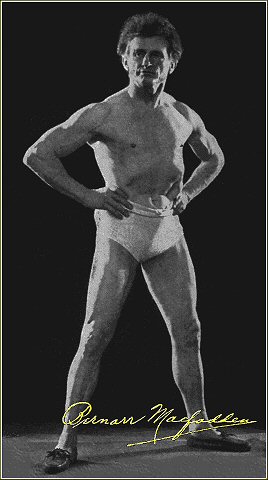
That, to me, is a powerful statement about what's going on here. What's also laughable about it is that this is the same medical establishment that has been horribly inadequate in determining what people shouldn't be eating to begin with. They do expensive and extensive studies on the effects of refined sugar to find out something that their ancient Nemesis Bernarr MacFadden told people back in the 1910's. He certainly didn't need to put a human in an MRI and feed them soda to prove that high fructose corn syrup royally sucks! They just weren't paying attention because they fucking hated MacFadden's guts!I think that MaFadden is in his 50's in this picture.
The simple fact is that they've based the medical practice in the USA almost solely on being reactive than proactive. It's not hard to find a doctor who can't even tell you what cholestrol does for the body but can prescribe a host of drugs to bring it down.

Ultimately, I think that half-truths make for half-ass results. Going around distorting the truth about sugar won't amount to people reducing their intakes. Most of us know that cocaine and sugar aren't related to one another because they release lots of dopamine any more than a Prius and a Hummer can both be called similar cars because they burn gasoline. This kind of half-baked thinking just cheapens the argument. Yes, the 1/3 lbs-sugar-per-day habit has got to stop but inviting in the same crooks who helped create the problem in the first place and expecting them to solve it isn't a sound strategy.

Wednesday, April 11, 2012

Concrete Weights

Be The First To Comment
I have been watching Craigslist for months, if not years, just waiting for a great deal on used iron weights. And I'm still waiting. Obviously you have to get legit weights at some point, but until I find that cheap stash of 45s at a garage sale or something I make due with with what I have. Casting my own weights out of concrete has made it possible to keep progressing while I continue the search for used weights.


Cost: $6 for the mold and then 5 cents a lb.
Project time: maybe an hour per plate plus dry time
Difficulty: It's just mixing cement for the most part so not very hard at all

Tools Needed:
  • Small shovel or trowel to mix and spread cement
  • Hammer
  • Scissors (to cut tape)
  • Saw or serrated knife (to cut plastic mold)
  • Wood saw and drill (optional, if you make the wood frame)
  • Empty Spray Bottle (optional but useful to spray water)
  • Caulk Gun (if you decide to use caulk and you buy caulk that needs the gun)
Materials Needed:
  • 80 lb. bag of Quikrete cement mix (I used the "just add water" yellow and black bag mix)
  • Duct Tape (optional but a cool addition so I recommend it)
  • 2 inch diameter PVC pipe
  • Round storage bin or oil pan or other round plastic container with a 15" diameter
  • Caulk (optional, you could use tape, I think)
  • Few handfuls of dirt


I cut this video down to the essentials so I won't explain the whole project step by step here, just watch the video. However, I will make a few notes below; things I didn't have time to elaborate on in the video.

A TEMPORARY SOLUTION

To me this isn't a permanent thing. Concrete is simply not as strong as we want compared to metal plates which are basically indestructible under normal use. Though concrete has high compression strength, the way forces would be applied to a plate on a bar being aggressively set down on a heavy deadlift would no doubt break the cement over time. Concrete also is not as dense. This means it will take up more space on the bar and result in less weight you can fit on your bar. It's basically like half as heavy as iron plates. So a 45 lb. concrete plate would be the same size (at least) as two 45 iron plates. That means if you could cram 800 lbs. of iron plates onto your bar, you could only cram 400 lbs. of concrete plates.

Also, I do not suggest you use only concrete plates. If you don't have any weights I do not recommend this as your solution, unless you don't plan to pull off the floor, meaning deadlifts or power cleans or rows, etc. I don't trust cement to be strong enough to handle the stress of setting down a heavy deadlift.

I suggest you have at least a pair of 45 lb iron plates, as well as the smaller increments, 25, 10, 5, and 2.5 lbs. You can make smaller increments out of wood or industrial washers. I made a post about that, look at the Project Index for it. I personally bought one of those 300 lbs. weight sets from the sporting goods store. I think that's a decent starter set. When it costs like $200 you do get a bar that will last at least a year, plus the 255 lbs. of iron plates, including all the smaller increments. So these concrete plates make a decent temporary addition to an iron set.

Eventually though you want to find some cheap used iron plates because concrete weights are not a long term solution in my opinion. Even if they hold up, you'll eventually run out of space on the bar. Now I suppose you could probably get something like 500 lbs. on the bar using a combination of iron and concrete weights. So if you never intend to deadlift more than that I guess it might be good enough.

But to me this is a temporary solution until I hit the motherload of rusty 45s from someone on craigslist or a garage sale whom doesn't care about lifting and just wants me to take the stuff away for like 50 bucks.

PRECISE WEIGHT

This I am ashamed of. I didn't put quite enough thought into it before I started the project. I basically decided on a size, a thickness, and then I poured my plates to that thickness. As a result, the two plates I poured probably aren't the same weight. Nor are they a specific precise weight. I was roughly intending them to be 35 lbs. I think they will be a little more than that after they cure. And if they both end up being the same weight it would be pretty lucky. Since I know how to do this right, I'm ashamed that I didn't do it this way. It didn't occur to me until I was already done.

I recommend you weigh out your dry cement mix. So if you want a 35 lb. plate dump 35 lbs. of dry mix into your mixing bucket. As a weightlifter I can only assume you have a somewhat accurate bathroom scale. At the very least it will be consistent so both plates will be the same. By doing this you will ensure that all the plates you cast are as close to the same weight as you can get them. This is what I should have done but I just didn't think of it in time.

As a result, though my plates will be roughly the same size, they are probably not going to be exactly the same weight. It won't be a big deal since I can just add micro plates to compensate when they are on the bar. My plates are also probably going to be a bit more than the 35 lbs. I was intending. Again not a big deal. But it's just easier if you weigh your mix. That way you'll only have to mix it up once and pour it into the mold. You will not have to mark your mold either. For what it's worth, 35 lbs. will be somewhere around 2.5 inches thick, just an FYI. I like this thickness because cement doesn't have a high tensile strength so having it thick is a good thing. I don't really recommend making light plates out of cement for this reason. They won't be as strong if you make them thin and if you make them thick but light you just waste space on your bar.

PVC PIPE

The way PVC is labeled is by the inner diameter. So when I tell you to use 2 inch diameter PVC pipe that is what it is labeled in the store. The actual outer diameter is more like 2.25 inches. So the hole it leaves in your cement plate will be 2.25 inches, which is more than big enough to fit on the bar. We make a better fit with a duct tape ring. See the video for that. I just wanted to clarify that 2" pipe is what it will be labeled as, and it will have an outer diameter of 2.25 inches.

THE EXTRACTION PROCESS

I made wooden frame to help me take the plate out of the mold by myself easily. I had the scrap wood and tools so I spent no money on it. If you don't have this stuff you don't have to make it. I'm sure there's something around the house you could use to support your plate as you tip the mold upside down. If the inner PVC pipe holds tight to the cement like it did for me in the video you might even be able to just pull the plate out using the PVC as a handle of sorts. The PVC did not hold to the cement like this when I cast me first plate though. Anyway, it's not rocket surgery here.  Point being, you don't have to spend money or time making that "extractor" if you don't want to. I only did it because I had the stuff and I was bored and figured it would make things really easy, which it did.

Also, when I cast my first plate I sprayed the mold first with some oil. The idea being that it would help release the concrete. The second plate I cast I did not do this. It doesn't seem to matter. The concrete will not stick to the plastic mold. However, I did have a hell of a time getting the PVC pipe out of the second casting. This may or may not have anything to do with not oiling it. The pipe also was a little wiggly (i guess the caulk didn't hold as well) the second time, so it may have set slightly off kilter, which is what I'm betting on. Point being, you don't need to oil it or use any kind of mold releasing agent. But if you want to spray it down with some WD-40 it won't hurt anything.

MARK YOUR PLATES

Once you let your plates cure for a few weeks I would suggest painting their weight on them. This is especially true if you messed up like I did and both plates don't weight the same amount. Mark their weight on them so you know exactly what they weigh.


INNER CORE

In the video I show you how to line the inside of the plate with duct tape to protect your bar and give it a better fit. Since then I realized there is another option. The PVC pipe you used to cast the center hole is the perfect size to slide over the bar sleeves on an Olympic bar. So you could cut down a length of that PVC the same thickness as your plate, then hammer it into the center. It will fit very tightly. As you saw in the video I had a hard time getting the pipe out of the plate when unmolding. I had just a hard of time hammering in the new shorter length of pipe. I'm not sure how this will affect the plate in terms of the concrete expanding. But it fits beautifully on and off the bar with ease.I would say the PVC core is nicer, assuming it doesn't have some unforseen negative impact on the expansion of the concrete.

That being said, using concrete plates is a temporary solution so you want the price to be as low as possible. I had the scrap PVC so decided to try it out.


- Carl

Thursday, April 5, 2012

Fat Grips With An "S"

Be The First To Comment
...because we use proper grammar and all that.

This isn't the fastest project but it is really cheap. Made from 100% duct tape it's not space age state of the art rubber. But it gets the job done all the same. These have all the versatility of the commercial product at a fraction of the cost.

Cost: less than $10
Project time: 3 hours
Difficulty: A bit tedious, but easy enough.

Tools Needed:
  • Scissors
  • Hack Saw or Serrated Cutting Tool of Some Kind
  • Pliers or Vice Grips
  • Pen, Pencil,  or Marker
Materials Needed:
  • 110 yards (100 meters) of Duct Tape
  • 4 yards of Masking Tape (optional)
  • Paper Towel Roll or 2 Toilet Paper Rolls

I know this video ran a little long. I will try to quickly describe the process below, if you can't watch the whole video. If the following directions are too abridged for you, then watch the video.


Step 1: Making the Core

We're going to use the paper towel roll or toilet paper roll to make the core or mold to form the fat grip around. If you are using toilet paper rolls, Put them end to end and run a strip of duct tape over the seam to make one longer roll. Cut the roll to about 7 inches (18 cm)  in length. Now cut the roll down the length of it.

Take the roll and a pen over to your barbell. Wrap it around your barbell tightly. Mark a line along the length of the roll where the top edge overlaps. Take the roll off the bar, roll it up tightly again to line up the edge with the mark you made, then run a strip of tape across it to hold it in this new new shape. What you have here is a roll that has, more or less, the same diameter as your barbell. 

Step 2: Sticky Side Up

There are two ways to wrap tape on your roll. One is the logical way, rolling it up the way toilet paper works. We'll call that "TP style" for the sake of ease. The other way is to run the length of tape down the length of the roll. We'll call that "length wise".

(left) Lengthwise, (right) TP style)
We start at one edge of paper towel core. Roll the tape TP style with the sticky side up. Wrap the tape straight around back overlapping on itself a few times. Cut the tape and pat the edge down. This can be a bit of a hassle to work with the tape sticky side up. This will only cover a  third or quarter of the roll. Now move over and run another strip of tape the same way, overlap the previous strip by a 1/4 inch or so. Continue doing this until you have covered 5.75 inches of the length of your roll.  If you cover more that's fine, you can trim it down in a little while. This is the size of three widths of duct tape and that is how big we will make our roll. If you want it shorter you can cut it down after you're done constructing the whole grip.

Step 3: Lengthwise for Structural Stability

You have your core now wrapped with duct tape, sticky side out. Now cut strips of tape and wrap them lengthwise sticky side down. Overlap them about a 1/4 inch and work your way around building up a few layers like this. If the strips you cut are longer than the sticky side down section, let them hang off the side which does not have exposed paper towel core. We do not want to stick tape to the core as we have to remove the core repeatedly through the process. Then trim the excess tape from the edge.

Step 4: TP Style is How We Roll

Again starting from the flush edge of your roll, wrap tape TP style sticky side down. Wrap it straight around overlapping itself. This time, do it until you have built up about 1/16 to 1/8 inch thickness (2mm). Wrap the tape evenly and tightly. If you get wrinkles you can peel the tape back and adjust. I used Duck brand duct tape and found it to be forgiving in this area and easy to work with. Once you've built up the thickness, cut the tape.

Move over an entire tape width and wrap that portion in the same fashion. Do not overlap here. We are going to wrap this in three sections, butt up against each other but not overlapping. Once finished, move over again and wrap the last of the three sections.

Step 5: Don't You Know I Will Cut You

We are going to cut a slit down the length of the grip because we need it to open  so we can get it over the bar. We're going to cut periodically through the wrapping process so that it's easier to manage. First we have to pull the paper core out. If you wrapped the tape tightly it might be hard to pull out so use your pliers or vice grips. With that out, use scissors to cut down the length of the grip. This first time you can use scissors because it's not thick yet. If you don't cut this perfectly straight it's not the end of the world, just do your best.

Step 6: Lather, Rinse, Repeat

Put the core back in the center of your duct tape grip. Now you are just going to repeat steps 3, 4, and 5 until the grip is as thick as you want it. Remember to close the grip tight around the paper core as you secure it with your lengthwise tape (step 3) after having just cut the slit down it (step5).

As the grip will get thicker it will be too hard to cut step 5 with scissors. This is how I handle it: Look on the inside of the grip to find the seam where you cut the slit last time. Use scissors to snip the very end to mark this seam on the outside ends of the grip. Now with those two marks you can either use a hacksaw to cut through the top of the grip in a straight line, or you can simply use a ruler and mark the line, then cut with something that works a little better, like the serrated knife I show in the video (if you have one).

You literally just repeat these steps over and over again until the grip is as thick as you want it.

Step 7: That's Too Thick, Throw it Out And Start Over

How do you know when it's the right thickness? First you have to decide what you want. Right is whatever you want. The commercial product is 2.25 inches (57mm) thick. To measure this you can do one of two things. If you have a caliper (the tool designed for this task) then use that. I do not, I'm ashamed to say. So the other option, if you want it semi-precise, is to use math. If you know the circumferance of the grip you can figure out the diameter. In order to measure the circumferance you need flexible tape measure, like the kind you use to measure your biceps. So close the grip tightly and measure the circumferance.

All you have to do is take your circumference and divide it by 3.14, which is Pi. So if you are measuring a circumference of 18cm (which is about 7 and 1/16th inches) that will mean the diameter (or thickness) of your grip is 5.7cm (2.25 inches). If you want a different thickness you'll have to run the numbers yourself. Remember it's simple, just take your circumference measurement and divide it by 3.14 to get your diameter (thickness).

Alternatively, if you don't care about precision, you could simply take an Olympic weight and compare your grip to the center hole in the plate, which is 2 inches roughly.

Step 8: It's Too Long Dumbbell, I mean Dumbass

Constructed as I said, with three tape widths across, this will be too long to use on some dumbbells. If you want to use them on said dumbbells you will have to cut them down. Simply measure your dumbbell handle so you know how short it has to be, then use a saw to cut down your fat grip to the proper length. The commercial product is 5 inches long according to their website, just an FYI.

Step 9: From Slip to Grip

I don't necessarily think the duct tape is all that hard to grip. However, if you want to make it more grippy I have found that wrapping the outside in masking tape works well and it's super inexpensive. I had an old pull up bar with no knurling and a painted finish. It was hard to grip so I wrapped it in masking tape and it worked great, especially if you use chalk too. I never had to replace the masking tape so it held up well. You could use a specialty product like grip tape if you wanted but that's no doubt much more expensive. The masking tape works fine for me.

So that's the project. They work just like Fat Gripz and go on and off the bar easily and quickly. I am quite satisfied with them. And at less than $10 that's a great deal. The commercial product is $46 shipped to the U.S. If my, and by "my" I mean "Google's", currency exchange calculations are correct it costs more like $56 shipped to overseas. I don't know how much duct tape costs in Europe but I'm betting it's not $25 a roll.

However, you cannot get your name engraved on these duct tape fat grips. I'm sorry. I know your really wanted that. But I'm no expert so maybe there is a way. I'll leave that for you to figure out.

- Carl

Monday, March 26, 2012

Mini Platform

Be The First To Comment
Trying to clear out some wood in the garage I decided to build a mini platform, if you want to call it that. I will be able to use this for deficit deadlifts, as well as rack pulls, and squat lockouts, if I so choose. I'm sure there are other uses but that is what I can come up with right now. Though I don't actually show you how to build it, I think you can figure it out based on the video if you want to make one yourself.


HOMEMADE MINI LIFTING PLATFORM


Th construction of this thing is just basic stuff and I'm sure you need no explanation. I had four scraps of 4x4 so I took the shortest one and cut them all to that length. Then I measured my deadlift stance width and cut the 2x4 boards to make the platform wide enough for my needs. Then I screwed it all together, traced the outline of it on my scrap of plywood and cut that out and screwed it down. Nothing fancy. You can see everything you need to know in the video.

This creates a rather nasty deficit as it's over 3 inches in height. But I could always rest the loaded barbell on some plates laid flat on the floor to raise the bar up a bit.

I don't mention it in the video but I realized I could do squat lockouts with this as well. By standing on the platform I am effectively tall enough to then quarter squat without walking the bar out of the stands. In other words, squat lockouts. I'm more of a fan of heavy supports, which is to say just standing there with the heavy ass bar on your back, so I may never use this platform for squat lockouts. 

Power shrugs, as some people call them, are basically the same setup as rack pulls so this would work for them as well.

- Carl

Sunday, March 18, 2012

The attitude is a WASTE!

Be The First To Comment
Philosophy isn't something that I've studied much in my life. I confess to know barely enough to say that I have basic, passing knowledge of the subject. After all, I wasn't planning on working at Starbucks so I didn't feel the need to go to college and major in Philosophy. Still, I do recall Aristotle jotting down some notes years ago that virtue is the middle ground between excess and deficiency.

In this subculture of huge personalities performing so regularly on the theater of excess, we get treated to some pretty outlandish behavior with alarming frequency. On any given blog entry, article, forum visit, and even a real life gym-training experience, we're bound to be treated to someone that thinks that their bad attitudes are somehow beneficial to the cause.

The most obvious, and the one that gets on everyone's nerves with predictable consistency, has got to be those arrogant poseurs. They're the one's who don't miss an opportunity to flash their perfect midsection to the camera after doing handstand push-ups, never let their chest hair grow any more than two days without shaving, and never forget to wipe their spray tan off of their fingernails. It's an overwhelming display of arrogance that can cover up any sort of decent information that such people might actually be able to lend.
Actually written as a parody of gym douchbag antics.

Along those lines of cocky displays of perceived awesomeness are those people who go out of their way to make sure you know how hardcore they really are (this was brilliantly written about here). It's slightly less annoying since there isn't so much pageantry and primping.Still, having the eyeballs treated these kinds of loud proclamations of being bad-ass or being within earshot of the paleo-addicts making an effort to talk loud enough to let everyone in the produce section know how paleo they really are wears thinner than most super models.

Meanwhile, the rest of the animals in zoo suffer from some sort of delusion that being the real deal in all things strength means that they have to be so off-the-chart rude that they make an undersexed rhino look genial. We all know that there's more black and white to this thing that we do than most people want to admit. Since when did that give the gym gorillas the cart blanche to be assholes? What does that end up helping?

Frankly, how much does all of this excessive attitude help? I always thought that most of what I'm complaining about here started out as one, minor tool that people did to motivate themselves. When I get look in a mirror, I want to like what I see. I throw up comic book pictures and listen to heavy metal music as a way to stimulate myself. It's all a shout out to me and not anyone else.

Here's a great saying that applies to all of this: greatness doesn't need to explain itself. We know powerful, motivated people when we see them. People who take the time to shout it out probably aren't either.
I just wanted to throw this out there before I close this rant down: How many women even think guy is good looking despite all of his flaunting? All the GTL and the only women he gets laid by are drunk when they're fucking him!

It's all just a waste of precious time and energy that would be far better spent with training.

Saturday, March 17, 2012

I hope you're not buying the latest warning about red meat...

Be The First To Comment
Something had to break me out of my blog-posting draught and there's probably nothing better than a bunch of scientists spreading a rumor that you're going to die too soon if you eat a...

In case you missed it, The Harvard School of Public Health released a study warning Americans that their risk of premature death from what kills most Americans these days (heart attack, cancer) goes up 13% if they eat a serving of unprocessed red meat with any regularity. If an processed red meat product touched their tongues, that number pops up to 20%. If making your brain ache and unable to focus from reading scientific jargon is your idea of entertainment, then here you go. I found this nice article on the topic here. Still, I took one for the team, read the abstract, and you bet I've got a reaction to some Massholes telling me that something people have consumed for centuries without such obvious and detrimental effects to human health is going to now kill me 13% faster.

I'm sure most of us here have heard the phrase, "thoughts become things." If there was anything that leaped out of this information, it was these statements:

Men and women with higher intake of red meat were less likely to be physically active and were more likely to be current smokers, to drink alcohol, and to have a higher body mass index (Table 1). In addition, a higher red meat intake was associated with a higher intake of total energy but lower intakes of whole grains, fruits, and vegetables.

I can't speak for everyone else but this quote paints a very clear mental picture of someone (and I'll bet we all know someone like this) who revels in the fact that they enjoy not taking good care of themselves. In the United States, the best way to brag about how you're not a health nut is to proclaim that you drink, smoke and eat lots of red meat. If people get their rebellion on like this, then what's the point of eating anything resembling a plant?

So, it's not really surprising that there aren't a lot of people who sit down to a slab of steak and a head of steamed broccoli. It's a style of eating that doesn't fit into the, "I don't give a fuck," eating mentality.

After my aching brain's swelling went down from statistical overload, I came to the conclusion that this study didn't really discover that red meat kills you faster. It's a lifestyle that seems to go hand-in-hand with eating red meat that does people in. By fingering red meat as the culprit to heart attack and cancer, western medicine created a banner food for the "enjoying life" crowd to flock to. Rather than point to the lifestyle, the food is becoming the culprit. Their thought of making red meat bad in the minds of people became too many people's reality.

I don't buy that red meat is bad for humans and I never will. I have an issue with doctors, nutritionists, and other "experts" telling me that something humans have consumed for Milena without the rash of heart attacks that we see today is the source of premature dirt-napping. Some evidence exists that cancer barely even exist until 200-300 years ago. Linking consumption of red meat that's gone back farther than our current cancer and heart attack epidemic just defies any good sense.

I would stretch that to many processed meats as well. If you note in the links I provided, among the processed meats named were salami and bologna. If my memory serves me correctly, these are Italian in origin. Therefore, couldn't these be described as part of the vaunted heart-healthy "Mediterranean Diet?" That becomes kind of hard to explain away, doesn't it?

These kinds of studies do prove one thing: studies can be made to say just about anything with the right crafting. Either this one had an agenda before it commencement or those who conducted it are unable to figure out the problem when it's staring at them.

Friday, March 16, 2012

Foods to Eat to Build Muscle on a Budget

Be The First To Comment
Homemade strength requires more than just weight training to accomplish. You also need good food and plenty of rest. So today I'll cover the second part of the equation: food. Specifically, food when you're on a budget. What should you eat if you're on a budget but still want to build a lot of strength and muscle? The common impression is that as a weightlifter you have to eat like a bazillion grams of protein and $50 worth of supplements pre, post, and peri-workout a day, but that doesn't mean it's true.


The first and obvious thing to note is that there is a limit to how cheap you can make things. You have to have SOME amount of money to spend each day on your food. If you don't have enough you're not going to be able to afford everything you need to have a nice diet as a lifter. In other words, if all you can afford is two packs of Ramon each day you're not going to build any muscle. There is no magic here. We can be smart and we can be frugal, but we still need at least about $5 a day. This of course depends on where you live but you'll be hard pressed to get away with much less than that in non-city locals in the States. This is not simply about surviving, it's about building muscle. You don't need 400 grams of protein and 7000 calories a day. You're not Mr. Olympia and you don't need to eat like you are. But you can't just eat 1800 random calories a day and think everything is fine either.

Before we discuss the food items let's quickly run through some money saving tips; obvious as they may be.

- BUY IN BULK. Anything that can be stored long term should be bought in bulk if it turns out that it's cheaper to do so, which it usually is. Meat can be frozen. Dry items like rice keep for a long long time. If you have the money to make the upfront cost this saves you money and time in the long run. I buy rice in 20 lb. bags, as an example.

- BUY WHEN ON SALE. Items that can be stored longer term should be bought only when on sale. I buy family packs of chicken breast only when it's $1.80 or less per lb. Then I buy a lot of it and freeze it. I don't have to buy this for months then. When I'm running low I look out for another sale to stock up again.

- SHOP AROUND. Check out the stores in your area and figure out who has the best prices on the things you buy, especially if you buy a lot of the stuff. I found out that the big chain grocery store where I live, Meijer, is grossly overpriced on eggs. The Aldi has them for as much as $1 less per dozen. Even the local "mom and pop" store has them for 35 cents cheaper per dozen than the Meijer. Needless to say I don't buy eggs at meijer, especially since when I get on an egg kick I eat a dozen a day some times. Alternatively milk is $2.50 to $3.00 at Meijer and Target. Most other places it can be $3.60 a gallon. I'm not saying that you need to go to five different stores every week, but it might be worth an extra stop or two to save some money.

- START A GARDEN. Here's an idea, if you have the space for it, start a garden in the spring. You have to buy some things, like seeds, but for the most part you're talking about as cheap as food can get with gardening. And vegetables can get pretty expensive so growing your own can save a lot of money while allowing you to get a whole slew of micro nutrients you may be lacking due to budget. Of course such things are cheaper in season, which is when you would be growing your own, but still. Choosing stuff you can freeze or pickle or in some way preserve for later use is a good idea because you're going to get a whole bunch of whatever it is you are growing at one time.

- GET A JOB. To those that are young and perhaps still in school, be it high school or college. I would suggest to you that you get a job if you do not already have one. You'll have spending money and then you'll be able to buy better food. This whole muscle building endeavor is better if you can afford to do it the way you want. It's easier and more fun. So if you can find a way to get some more money that would be a good thing to do. You have to make sacrifices in life. It might not be fun to work but it will enhance the rest of your time when you can buy better things.

Now let's get into specific foods, the reason you're probably reading this article. In my experience here are some of the best and cheapest bodybuilding/weightlifting foods if you're on a budget. Obviously prices may vary in your area so you'll have to check this out for yourself.

THINGS YOU SHOULD BUY

EGGS
This is one of the best. I can get a dozen large eggs for $1.20 at Aldi, and lately they have been 88 cents a dozen. My local mom and pop store has medium eggs for $1. If the label is to be trusted the only difference between the two is 120 calories of fat. In any case, you can't beat this price for what you get. 72 grams of protein and 700 to 800 calories, none from carbs. This is one of the cheapest all around foods. With all that protein and the added calories (assuming it fits into your diet) it's hard to beat eggs. You can also scramble them, hard boil them for easy transport, or blend them into a shake raw. Very versitile.

MILK
The best thing about milk is that it's liquid. If this wasn't the case it wouldn't be nearly as good. In terms of content per price it's good but not as good as eggs. A gallon averages $2.75 in my area. If you buy whole milk you get 2400 calories and 125 grams of protein. As a side note, you  get quite a bit of lactose (sugar) at something like 190 grams a gallon. Even so, this means that $1 worth of milk is roughly going to give you 42 grams of protein and 800 calories. Good, but like I said, not as good as eggs. But the fact that it's liquid and you can get lower calorie milks make it a useful choice.

WHEY PROTEIN
Perhaps this is technically a supplement but I want to reference how cheap this is compared to other food so I'm listing it here. I buy my whey protein from TrueNutrtion.com. TN is awesome but you have to keep in mind that they are a bulk supplier. You can buy any amount you want from them but you get discounts for buying a lot. And since you have to pay actual shipping charges it's not lucrative to buy a little at a time. If you want to save maximum amount of money then buying in bulk is the way to go. If you don't want to buy in bulk then TN is not your best option. Body Fortress brand bought from Walmart is a good choice. It currently costs $15 for 2 lbs. which is 25 servings with 25g protein per serving. That comes out to 64 cents per serving. I've had the Body Fortress Vanilla and all I can say is that it makes milk taste like vanilla milkshakes so it's delicious. You can also get the In water it's drinkable but tastes like what it is, vanilla sugar flavored water.

You can also get the Whey Tech Pro 24 from Vitamin Shoppe for $48. It comes out to 63 cents per 25g of protein. I haven't had any of their stuff so I can't comment on that.

TrueNutrtion.com is a reputable company so I trust their quality and I don't mind buying in bulk so that's why I use them.

The cheapest protein? Depends on how much you buy.

Before I continue I want to say that protein powder is not essential. Companies obviously want you to buy their products so they advertise it like you can't make any gains without protein powder. The truth is, it's just a food. You do need adequate protein to build muscle. Whether or not it comes from whey powder or any other source doesn't really matter. Whey is an awesome source, and powder is incredibly convenient. But convenient doesn't mean necessary. Some powders are very expensive and if that was the only option I wouldn't use it at all.

When I first wrote this article, TrueNutrition.com had a bulk powder called "Recession whey". It was a whey isolate and concentrate blend, basically comparable to ON Gold Standard but it was half the price. By ordering in bulk (50 lbs. which would last a year at two scoops a day) you could get the price down to 44 cents per scoop (each scoop having 25g protein). That was an awesome deal. That product, however, is no longer available. They have a new product to replace it called "Whey Protein Concentrate - High Grade",  and it still is the cheapest source that I know of, as long as you buy enough of it at one time. If you were to buy 50 lbs. of it, it would be 49 cents a scoop (meaning 25g protein per scoop). If you buy 16 lbs. of it, which is the minimum I would ever buy from TN, it will cost about 53 cents per scoop.

They, of course, have more than protein, so you can get all your supplements like creatine there for dirt cheap as well. The whole point of the website, in my view, is to save maximum amount of money by purchasing a whole lot of whatever it is you're buying at one time. If you don't, shipping can screw you. So all around, TN seems to be the cheapest place for any kind of protein powder, and other supplements, as long as you are willing to buy in bulk.

If you do choose to go that route, you can use the coupon code CLS807 at checkout and you'll save 5% on your order. To be honest, anybody can use that code, but when NEW customers use it for their first order it counts towards earning me free protein. That, however, is just a perk. If I didn't use and believe in their stuff I wouldn't be writing about it. So thanks for anyone who does use code CLS807. I appreciate it and it helps me out by lowering my food bill..

That being said, (sorry if you felt like that was a commercial) that is the cheapest source of protein powder of which I know. If you know a cheaper source leave a comment. The cost comes in around 50 to 55 cents per serving, which is 25 grams of protein. This makes it comparable to meat and milk, and that's ultimately the point I want to make. Protein powder doesn't have to be expensive. it doesn't have to be 80 cents a scoop or $1 a scoop or $2 a scoop. Basic protein is only about 50 cents a scoop. And because it is so convenient it definitely has a place in a lifter's diet, even if you're on a budget. Buying milk or chicken, for the purpose of more protein won't save you any money. Of course, whole foods usually have more calories which can be a good thing, two birds one stone and all that.

CHICKEN BREAST
I wait until the family packs of chicken breast go on sale for $1.70 to $1.80 a lb. then I stock up on them. This puts their price point at 45 cents per serving of 25 grams of protien. Just like the protein powder. Obviously they are a lean source so no extra calories.

GROUND BEEF
The fattiest, and therefore the cheapest, not to mention the extra free calories, they sell in stores is 70/30. Aldi's has this for $2.20 a lb. If you need the extra calories it ends up being comparable to chicken breast. Since the chicken doesn't have as  many calories, if you made those up with a cheap source, like white rice, the end result is that the ground beef versus the chicken and rice is basically the same macros for the same price. So if you need the calories, ground beef is an alternative to chicken and rice. And you don't get all the carbs. You can usually get frozen boxed beef patties for pretty cheap as well. It's cheaper than ground beef from the meat counter, which goes on sale for $3 a lb. But the frozen patties are not as good of quality. They have basically been reduced to complete mush and then pressed into patties.

WHITE RICE
This is the only grain I eat. Or I should say it's the only grain I don't have any reservation about eating in abundance. I don't go in for all that whole grain stuff given that they are chocked full of phytates and anti-nutrients and gluten and such. I'm just not interested in that. White rice is essentially empty calories, but then again this isn't always a bad thing. Post workout for example. I can get a 20 lb. bag of Riceland brand rice for $10 on sale. That comes out to something like 3 cents per 100 calories. You might be able to find even bigger bags for even cheaper per lb. but in the stores I go to 20 lbs. is the biggest.

POTATOES
I mean regular, not sweet potatoes. There's anything wrong with sweet potatoes, they just aren't as cheap. Again a good source of cheap calories for post workout. These end up being something like 9 cents per 100 calories. And they lend themselves to taking copious amounts of butter to pack on even more delicious and cheap calories.

BUTTER
I mean butter, as in cream, not margarine, not vegetable spread, not I can't believe it's not butter. I've found that Aldi is the cheapest place for this. It can get as low as $2 a lb. It ends up being about 7 cents for 100 calories. Butter freezes well so when it's on a big sale buy a lot of it and freeze it to hold you over until the next sale. I should mention that I'm of the mind that butter is good and processed oils are bad. I understand that many people hold a blood feud against saturated fat and would therefore like to persecute me for recommending butter. I have no problem with you if you believe that saturated fat is going to kill you. I personally think the trans fats and ridiculous amount of inflammatory poly unsaturated fat (omega 6) in the hydrogenated and processed oils is going to kill you. We'll just agree to disagree, or not. But yes, I love butter and eat an absurd amount of it. It's a great way to keep your calories up if you're a so called "hardgainer" who doesn't eat enough.

Also, I'm aware of Kerrygold grass fed butter. But that is expensive stuff and this is an article about saving money. Obviously in an ideal world we would eat raw milk and grass fed everything from local farms. And if you have the money to do so, please do it. And if it offends you that not everyone is doing it, send us all the money and, at least I, will gladly use it to buy grass fed meat and dairy.

COTTAGE CHEESE
First, there's nothing wrong with cottage cheese; but I usually don't buy it. The reason is because it's more expensive than milk. Cottage cheese is at least $2.75 for the big tub, which has  like 80 grams of protein in it and a total of 660 calories. And this is the full fat stuff. A gallon of milk has 125 grams of protein and up to 2400 calories. So in terms of price per content the cheese isn't a great value. Although it has a lot of sugar, remember that the protein in milk is mostly casein too.

Now if you want the cottage cheese for all the, mostly isolated, casein so you can have it before bed okay. I'm more of the mind that it's not gonna freaking matter if you take whey versus casein. These are minor details that people get obsessed about. As if you're not gonna make gains because your protein digested "too fast" tonight. Do you really think you go all catabolic by not digesting food 24/7? Get real, we'd be extinct if our bodies were that fickle.

So that being said, for $2.75 I could get 6 scoops of protein powder, which is 150 grams of protein, nearly twice what I get with cottage cheese. I'll take double the whey, thank you very much. Just wake up in the middle of the night and have an extra serving of whey if you're that concerned about digesting food at all times. This way you'll get even more total grams of protein. Nothing against cottage cheese. I think it's delicious and whenever I go to a salad bar, my "salad" is little more than cottage cheese, ham, and eggs.

TUNA
Tuna can be a good source of lean protein too. Depending on the price it may or may not be quite as good as chicken. In my area tuna costs about 70 cents a can when on sale. This means it's more expensive than whey protein or chicken. Tuna would have to be less than 50 cents a can to be comparable. But if you like tuna it's a good source. Just because it's not the cheapest doesn't mean it's not cheap. I don't eat mayonaise, nor do I eat bread or pasta. So I'm at a loss for what to do with canned tuna. I'm not gonna eat it straight out of the can. I'll just buy chicken because it's cheaper anyway. And if I want a quick snack I'll just use whey protein, again cheaper.

OATS
I'm not a huge fan of oats. I occasionally go on a binge and eat oats for breakfast for a few week. They aren't technically the best food but nor are they the worst. They don't contain gluten but they are still a grain and have phytates and whatnot. But for what it's worth they are a cheap food source. Though how anyone can tolerate them when prepared with water instead of milk is something I don't know.

PEANUT BUTTER
Peanut butter really fills me up. And as a guy who has always been lean and never had a problem staying that way, my problem will always be making sure I eat enough. So I typically avoid a lot of peanut butter for this reason. That being said, it is a cheap source of calories and has some nice protein content as well. Natural peanut butter isn't much more money than the regular stuff so I recommend the natural version, just peanuts and salt. At $3.00 a jar, it comes in at about 13 cents for 100 calories. Of course, for every 100 calories you're also getting about 4 or 5 grams of protein as well. Peanut butter doesn't last forever but it will keep for a long time so you can stock up when it's on sale if you eat a lot.

You can also make protein bars by freezing peanut butter mixed with protein powder and honey. The texture is delightful. I simply have to figure out how to put a chocolate coating over it, like a snickers, without using artificial sugars. When I do that I'll be sure to post an article because that would be an amazing high protein, no junk food candy bar right there. I'm finding it difficult to come up with a way to make chocolate without sugar. I'm not even sure if it's possible.


POTASSIUM RICH FOODS
Potassium is an important electrolyte. Because of weird government restrictions, it's also something you cannot supplement effectively. There is a legal limit of 99 mg doses for potassium supplements. The current recommended intake of potassium for a normal person (not an athlete or lifter) is about 3500 mg. You're not going to take that many pills. So you pretty much have to get it from food. Some people will get enough without trying but some of you may not be getting enough. In order to assist you in making an effort to do so, the following are some foods high in potassium:

Potatoes with the skin left on
a typical serving of potatoes is 150 grams. This contains roughly 700 mg of potassium. This is a great source because I've already mentioned that potatoes are really cheap and a good source of carbs. So in addition to that they have a lot of potassium. Eat just two 150 gram potatoes in a day and that's already 1400 mg of potassium.

Orange Juice
A single 8 oz. serving has 450 mg of potassium. Not a bad choice to start the day.

Milk
A single 8 oz serving has 350 mg of potassium.

Bananas
The poster boy for potassium. An average banana weighs in the range of 120 grams and has just over 400 mg of potassium.

Beans
It depends on the type of bean but a cup of cooked beans has between 600 and 1000 mg of potassium. And of course they have lots of protein and fiber as well. Beans do have anti-nutrients though and I'm not sure if the benefits outweigh the negatives.

Leafy Greens like Spinach
Veggies like this aren't necessarily cost effective but they do have about 500 mg of potassium per 100 grams (raw weight).

Meat
I'll just classify it all together since it's similar. Meat typically has about 300 mg of potassium per 4 oz (raw weight). Obviously meat is awesome and this is just one more reason why. If you eat a lot of meat that could go a long way toward your potassium needs. For every lb. of meat you get about 1200 mg of potassium.

So you can see, 1 lb. of meat, a few potatoes, some spinach, a banana and a glass of OJ in the morning, copious amounts of milk for good measure, and you're good to go on potassium. But you could easily fall into a diet that doesn't get enough potassium. If you don't eat that much meat or milk and "can't afford" vegetables you may find yourself low on potassium. As a lifter it's probably better to not be in that situation.  These, of course, aren't the only foods that have potassium in it. You can look up your favorite foods online to see if they have any significant amount of potassium. I just wanted to bring the subject up since it's an important nutrient and it's something you can't effectively supplement with a pill. Your multivitamin does not help you here. It probably doesn't even have potassium in it, and if it did it could only legally contain 99 mg anyway.

THINGS YOU SHOULD AVOID

The concept is simple, you should buy food and avoid food like products. Cookies, crackers, canned soups, TV dinners etc. The fact is this stuff isn't as cheap because you pay for the product development and marketing and for the name brand. If you want to eat junk make things at home out of white flour and white sugar. Those are probably the two cheapest sources of calories that you can buy. Flour is something like 4700 calories per dollar and sugar is not far behind at something like over 3000.

Now I'm not recommending that you eat these things at all, just saying if you want junk and want to save money make your own junk out of the raw materials that the junk products are made out of. In other words, if it's cheap junk calories you're after throw some sugar into your protein shake instead of buying Oreos.  Make a breading out of egg and flour for your chicken instead of eating Doritos.  You can make biscuits as home with nothing more than a bit of baking powder, some flour, margarine, and a little milk. If you want junk calories that's the cheap way to go about it. And yes they are delicious biscuits. You get the point. Heavily marketed products are not as cheap as basic food ingredients. I rarely go down the aisles of the supermarket since most of the "real food" is around the outer edges.

Also, I have to touch on the subject of fast food even though it's obvious. Your overall best bet in terms of economy is the McDouble from McDonalds. Taco Bell has a burrito that is actually cheaper in terms of calories but it has less protein. Still that's something to consider. In any case you are getting something like 400 calories and, if you don't count that which comes from the bun which you shouldn't, 17 grams of protein for a dollar. This is, of course, a horrible value just based on price per content. The only value in it would be the taste and the convenience. Eat fast food if you want to but don't kid yourself about it being the cheapest or healthiest option. If you're on a budget and you're eating out regularly, stop it.

Though it won't look this pretty, the McDouble is probably your cheapest fast food source of cals and protein.
For a dollar I could do better than 400 calories and 17 grams of protein. A lot better. Hell, I could have a scoop of whey in 16 oz of whole milk. That's over 400 calories and more importantly it's over 40 grams of quality protein for only  83 cents. Or swap the powder with chicken breast at no extra cost. Or swap the milk for some rice. The possibilities are endless and it's going to be much cheaper and healthier than the fast food option. So if for some reason you didn't understand that even the cheapest fast food options are costing you more money than the food is worth, now you do. You pay for convenience and you pay for the marketing and development that goes into these products.


SUPPLEMENTS

I've mentioned protein powder already because that is often a major staple in a lifter's diet. As far as other supplements go I like to keep it basic. If you're on a budget you need to keep it basic. Don't get sucked in by all the hype. Even if most of this stuff works it's not like going without Jack3d or Nox5000SpaceOddessy is going to really stop you from making gains. At best, this highly marketed stuff gives a minor costly advantage. At worst it's just a waste of money. So here are some basic things, and of course basic means cheap.

CREATINE
When I was a teenager I used to think creatine was akin to steroids. I think a lot of uneducated people still do. I'm not sure why people think that. maybe it's because creatine works, or maybe it's because athletes accused of steroid use in the 90s said they took creatine. In any case creatine is nothing like steroids. It's nutrition. It's found in red meat. And it belongs in the same category as your multivitamin and minerals, or perhaps with your macronutrients since it's what your muscles use for energy when doing short duration work (ATP).

That aside, creatine is one of the few supplements that actually works and the science and research is there to prove it, plus the anedotal evidence of nearly every lifter who tries it. It's also dirt cheap, as long as you buy the basic Creatine Monohydrate, which is what all the research is about anyway. You don't need anything fancy. CreaPure is the quality German source of creatine so that's probably worth getting. Whether you get micronized or not is up to  you. It might be in all in my head but when I tried a generic brand of creatine I didn't notice anything. But when I tried Optimum Nutrition creatine it did see some gains. They were both micronized and both CreaPure, so who knows. Maybe I'm just crazy. In any case, creatine monohydrate is all you need. You don't need these ethyl esters and whatnot.

MULTIVITAMIN
If you're on a budget you're not going to be getting copious amounts of fruits and vegetables. As such I recommend a cheap multi-vitamin (prefereably one with some minerals, like zinc, as well if possible). Maybe it works maybe it doesn't but it's super cheap so it's worth it just on the chance that it might help. The trick with this is to wait until the store has a buy one get one free deal, which they have all the time at CVS or Wallgreens or your local grocery store. They usually all have them at the same time. When they do, buy the biggest bottle they have. This way you'll get two of the biggest bottles for the price of one. This will last you like 8 months or more and cost a few cents a day.

FISH OIL
NatureMade brand is a decent choice. And when I say "decent" I mean it's better than the generic store brand but still just as cheap.  Again buy when on BOGO sale and get the big bottles. Storing these in the fridge is probably a good idea. No need to stock up, they have the BOGO sales all the time so just buy one, and get one free. Again pennies a day, and when I say that I mean less than 5 cents a day. Of course it depends how much you take. Most recommend more than what the bottle calls a serving. But in this regard you have to do what your budget allows.

I personally favor fish oil in a bottle rather than the gel caps since I would rather not swallow that many large pills and instead just chug a 1/8 cup of the oil. The pills seem to be cheaper though. Another thing to keep in mind is the amount of OMEGA 3 fatty acids in each pill/serving. 1000 mg of FISH OIL is not 1000 mg of OMEGA 3s. So if you want 3000 mg of OMEGA 3s each day, just an example, you will have to take more like 12 grams of fish oil. I think that's a common mistake. Just be aware of that, if you are advised or decide to take a certain amount of OMEGA 3s via fish oil.

ZINC
If your multi doesn't have zinc you might consider supplementing it separately. Even if it does it probably doesn't have a lot (15mg) so you might want to add extra. Again, same deal as above, BOGO all the way. It's free suppliments, why would you ever buy if it's not BOGO?

MAGNESIUM
Here's the thing to consider with magnesium. It's pretty much a vital mineral and as a weightlifter you need even more of it because of the physical stress that goes with lifting weights. You also lose magnesium through your sweat. You use it when you consume sugar. And farmers do not fertilize their soil with magnesium so the soil is very depleted which means the food you eat has very little magnesium in it. It's basically a must use supplement.  But here's the catch. Cheap magnesium pills use magnesium oxide. This is garbage and your body only absorbs about 4% of it. You need to find a supplement other than magnesium oxide. There are many. There's magnesium citrate, magnesium malate, chelated magnesium, There are many to choose from and some are better than others. One thing is for sure though, and that is do not use magnesium oxide. You're just wasting your time. So you can't really go the super market BOGO with this one. And if you start taking magnesium and notice you have loose stool then dial back the dosage or switch types. Some types do not have this effect and some do.

B6
If you're trying to replicate what's in ZMA you'll need to supplement at least like 6mg of B6 a day. I don't do this. My intention was never to replicate the ZMA formula. I'd say I get about 2mg from diet and my multi has another 2mg. ZMA has like 11mg in it and the recommended normal daily intake is less than 2mg. Most B6 supplements are 100mg doses which is way beyond ZMA formula. Even if you cut the pills into quarters that's still more than you need. You could go with a B-complex, I suppose, which usually has more like 10mg of B6 as well as other vitamins.

CAFFEINE
For the most part pre-workout supps are based on caffeine anyway. I just buy the Jet Alert from Walmart and cut the pills in half. That's 100 mg doses then and it lasts over a year. All for less than $4. So that's like 7 cents a week if you lift three times a week. Sometimes I lift four times a week, but the extra session usually isn't enough to warrant a pre-workout jolt.


Found this when dumping out the shop vac, that damn near pays for  my whole supplement stack for the day.
So that's my list of cheap good foods for an athlete, lifter, or bodybuilder. I am by no means saying this is all you should eat or that you shouldn't eat other things. I'm just listing what I've found to be the best deals for someone on a budget. Obviously how much protein you need and how many calories will determine how much you have to spend on food. Just remember, if you're really on a tight budget, shoot for minimums first. Stick to the basics. And don't go crazy with things you probably don't need. And even if things aren't ideal that doesn't mean you can't get results. Just because you may not be doing the absolute best thing possible in both training and diet doesn't mean what you can manage to do won't work at all.

In other words, do the best you can. And if reality tells you it's not good enough, then find a way to do better.

- Carl
 

© 2015 Strength Training Program - Designed by Mukund | ToS | Privacy Policy | Sitemap

Hide
X