Monday, September 30, 2013

The fitness Industry Is Dead?

Be The First To Comment
(It is a long article though) 
In case some of you use Facebook to keep up with what I'm up to, then chances are, you saw me mention that there are too many interesting things out there and I just can't get enough time to blog about them as life unfolds before me.  The link above was one such article, posted by a friend.  It's long but worth the read.  If you haven't sunk your eyes into it, then click above and then we'll talk...
The title alone is catchy, in a disappointedly-haunted sort of way, but it's probably true.  The fitness industry has clearly not worked.  For the past 40 years of the existence in the USA of reasonably-mainstream health and fitness clubs, diet trends, the supplement business, and gym equipment in the population has become a baffling story of living longer in the most unhealthy manner possible.  Sure, we can expect to live to 80 but things are getting to the point where our youth is considered finished off by the time we now hit 25 since we're so fat and sick all the time.  The health and fitness industry as most of us know it has existed in this puzzling time period and done nothing to make people live long and healthy simultaneously. 

How to live long and unhealthy simultaneously. 
So, something has to change.  The questions are obviously what and how.
While this article was thought-provoking, and will probably end up inspiring at least two or three other blog entries of mine, like any good conversation material I don't think it was all quite right.  While there is three-quarters of a century worth of information out there for us to reference about eating, exercising and being healthy it's not all correct.  In fact, most of it is horribly wrong.  Furthermore, the right information isn't in the hands of the people who could use it the most.  
There are large swaths of the health and fitness industry that still believe in calorie counting as best way to maintain a healthy body weight.  There are people who still think that cardio is the best form of exercising.   You can still find medical professionals that will tell you squatting is bad for your knees.  Others still hold onto an idea that was "proven" by feeding a rabbit (which is rarely used in any animal testing to simulate human beings) a high cholesterol diet even though said animal is strictly herbivorous.  Women still buy the notion that weight training will make them bulky.  The Shake weight saw the light of day as a legitimate fitness tool instead of as parody of infomercial exercise gear. 

Furthermore, the people who ought to know this stuff...don't.  Just like it's not hard to find people to give you bad information about exercising and eating, it's not any harder to find a health professional that doesn't have a clue about how to find complete health fitness.  Too many doctors believe the bullshit I mentioned above.  Or, how you can go to a hospital and be fed food as healthy as what you might find at Golden Corral.  Lots of people who do know about eating right don't really know or care how to properly exercise.  The exercise people often questionable diet advice and don't really care about being healthy.  The unfortunate truth about the history of modern medicine and the modern health and fitness movement is that they've rarely played well, working contrary to one-another rather than together.  Even those two factions have their sub-groups that bicker amongst each other. 
The publication known as Physical Culture[Bernarr Macfadden's magazine]....is an outstanding example of the money that is to be made from catering to ignorance and furnishing a contact between the quack and his victims...
The student of journalism is always suspicious o a slogan of this type whether applied to magazine or newspapers, for he knows that usually those publications that boast that are prepared for people who think they are actually edited for morons.  
 American Medical Association Bulletin, 1923
I've regularly thought that part of my education was faulty since there wasn't, at least, one semester devoted to learning about the human body and how to take care of it properly.  Then again, since information out there is so jumbled, incorrect and contradictory what good would it have done for me to take such a class anyway? 

The fitness industry doesn't get results that people want see because they continue to pass around bad information on how to get to a stronger, healthier place.  You don't get results when you have bogus facts to start out with.   If this doesn't get cleaned up then they can look forward to a continued descent into a parody rather than a useful reason for people to spend their money.  I agree with the article that getting the information right isn't enough but as far as I'm concerned, it's the first place to start.


Tuesday, September 17, 2013

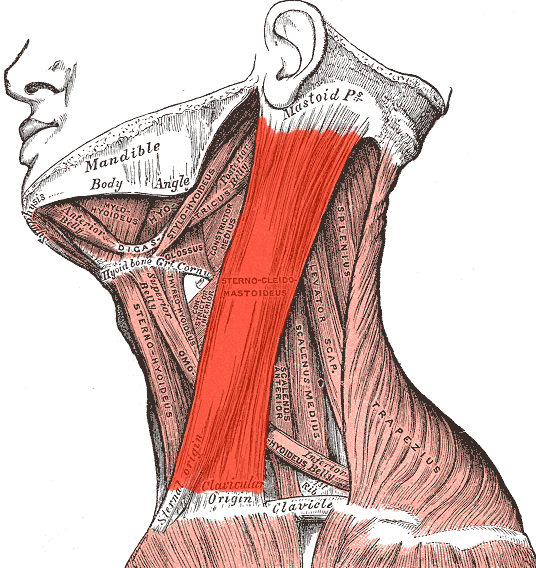
Falling back in love with my Sternocleidomastoids

Be The First To Comment
I swear to whatever gods are up there and/or in another dimension that as soon as I get this knee back to normal, I'm going to squat every, single day for a long, long time.  I don't care what kind of squat or how much I can handle I'm going to pull a Johnny Broz and not let a day pass without some sort of hips-back action.  That's how tired I am of looking down at my left leg while doing PT and realizing that it's only a matter of time before my neck is thicker than my left leg.  Of course, this isn't just from the months-long inaction of my left leg.  It's also the results of my weeks-long, re-kindled craze for training my neck. 

This wasn't a wholly original idea of mine.  Jamie Lewis did two, timely blog entries (here and here) about neck training a couple of months ago.  I realized then that this was a body part that I could work out while not putting any strain whatsoever on my bum knee.  What I find both fascinating, bizarre, and unfortunate about neck work is how common it used to be.  You don't need to do an extensive search on the Sandowplus.co.uk website to find a picture of some old-time strongman with a massive neck.  A bit more reading and you'll find out how they did that.  It was considered to be an essential part of strength training from the late 1800's until, at least, the 1930's. 
Obviously didn't skip neck training...
Since those times, neck training has fallen past the point of underground training into the realm of what even a lot of "hardcore trainers" consider borderline-insane.  The only groups of people that I know of that make an effort to train the neck with any frequency are boxers, wrestlers, and Navy SEALS.  In other words,  only a small group of people who regularly run the risk of getting their head or necks fucked up on a regular basis.   The biggest risk the average gym rat has of hurting their necks is by looking at a piece of ass to their left too fast and even then, their necks are likely so weak that even that could do some damage. 

The Navy SEAL explanation, as I heard it years ago, for the importance of neck training was pretty simple:  the neck carries your head...which protects your mind.  You may not be punched in the head regularly or wearing a heavy helmet on your head for HALO jumps but that doesn't mean that you have no business making your neck muscles strong.  The neck is part of your spine and since when do we think it's a good idea to neglect the spine?   You can also increase the size of your upper traps if you start neck training, if you're into that sort of thing. 

So, neck training is as neglected as it is important.  How do we train the neck? 

The Rules
Regardless of whether or not you grab iron or elect to do BW training with your neck, there are rules that apply equally to both.  The first thing about the neck is that it has to be warmed up.  The neck could easily be the most susceptible body part to injury.  Still, there is no need for a rocket-science 20 minute warm up procedure.  Just gently turn your head a few times in the directions that you plan to move it when you train.   The next rule is high repetitions.  You have to do a lot of volume with neck training to see results.  The movements are very short and doing low reps won't stimulate shit, even with a really heavy weight.  Think 15+ reps per set...or 30+ seconds of work.   The final rule is slower, controlled reps.   Remember The Bodyweight Files most fundamental mathematical equation here:  SPEED-CONTROL=INJURY

Bodyweight Neck Training
Believe it or not, Matt Furey probably gave the best BW neck training advice and nobody really noticed.  I can't blame everyone for that either.  Furey made millions off telling people that the wrestlers bridge could strengthen the spine like no other exercise while improve sexual function, curing foot cancer and eradicate fish herpes outbreaks.  What more could you possibly need if you had a pencil neck, a flaccid prick and a disorder that only animals with gills get?  Yes, my first foray into neck training was the wrestlers bridge but from the neck training standpoint, I think that there are two other options that work better. 
The first involved getting into a headstand with your feet against the wall.  From there, use the hands only to maintain balance while you roll your chin to your chest and back.  Then, roll the head side to side so each ear touches, or almost touches, the shoulders.  Some kind of padding on the floor really helps on this one.  While the forward and backward rolling does yield results, I skip it because I have a weird, egg-shaped head that makes this maneuver painful and leaves a bunch of redness on my scalp.  I mainly stick to the side-side movement.  This is a training effect that's hard to pull off with any other neck training. 

The second one that I liked was what I call the straight bridge ( I forgot what Furey called it).  Instead of resting on your feet and forehead, you grab two chairs, place less than the length of your body apart, and lay down with your feet/ankles on one chair and your head resting on the other, keeping your body as straight as possible for as long as you can.  This is absolutely brutal on the entire spinal musculature, including the neck.  Even 30 seconds of this will get your attention like no other iso-hold could. 

The Weighted Stuff
I opted to buy a neck harness when I was getting ready for my surgery.  There's not too much to explain.  Sit down while leaning forward with your back straight, start with the chin to the chest and carefully lift the weight until you're looking upwards.  Like I said above, do a lot of these per set... and lots of sets.  Again, under control. 

The second piece of harness lifting that I like to do is what's generally called neck crunches or curls.  You'll be lying down with the weights hanging behind your head (you may need to hold the harness in place with your hands to keep it from slipping off.  Just don't use your hands to pull the weight!) off from a bench.  You might be able to get away with a bed if you're not lifting much weight (less than 40 lbs...which may be okay since you won't use as much as you do with the first harness exercise).  From that position, bring your chin to your chest and back down.  You'll know when you're doing this one right because you'll feel like something's going to rip off your collar bone.  Do it wrong and it'll feel more like an ab exercise.  

Advice from Glen:  don't get cheap with neck harnesses.  Apparently he's broken two.  I bought a Spuds neck harness and while it's crudely put together, it does seem to hold up to the weight.  My early pictures of my neck training were with 35 lbs.  I'm now up around 75 lbs, training my neck two or three times a week, and it's still doing well.  Also, find a neck harness that doesn't put the lifting straps directly over your ears.  Elite FS's neck harness is wonderful for painfully folding your ears under the tug of the weights.  Spuds goes in front of the ears so the strap just rubs annoyingly on the front of the ears rather than crushing them.   
Yeah, that's a good reason to splurge on a good neck harness...

Another, more indirect option that I've done for months now is doing weighted BW movements (dips, pull-ups, and push-ups) with chains wrapped around the neck.  Prior to getting back into neck training, I did a lot of these with 30 lbs of chains around my neck.   In the past five weeks of neck work, I've put on about a half-inch on my neck, 17" to 17.5".  While my starting point wasn't spectacular, it's hardly pencil-necked for someone around my size (5'10" and 175-180 lbs) .  Putting weights around my neck during BW movements was the prime source of this. 

As I slowly begin the crawl back to normalcy from my ACL reconstruction, I find myself able to do a bit more in the gym every time I show up.  I mentioned to a guy I met at a gym that I take an off-day by training my neck.  He looked at me like I had just shit my pants, reached around, stuck my hand in my ass, and took a taste test. 


There is no good reason to treat the neck like some sort of glass-like appendage on your body.  There's a perfectly good reason why the second-biggest muscle in your back (trapezius, dumb-ass) inserts at the base of the skull, why the sternocleidomastoid muscle (yes, you should know what that one!) is about as thick as a small bunch of pencils on even a skinny-ass human, and why there are a pile of little muscles in the neck that practically rival the shoulders in quantity and obscurity.  That's because, like your shoulders, your neck should be big and strong.  If you have a weak neck and shit yourself when merely thinking of lifting 30 lbs by your neck, then you should consider sticking your hand in your ass and taking a taste.  Or, remedy the problem by getting some neck work done now. 
 

Thursday, September 5, 2013

Come on... YOU KNOW THIS!

Be The First To Comment
I won't deny for a moment that the more that you dive into strength training the more things get murky between what is the right proportion between the science of getting stronger and what your intuition says about getting stronger.  Do you base what you do on what sports science says that you should do?  Or, do you just go off how your body feels?   Depending who you go to for training knowledge, the answer to this question can vary with dizzying and mind-boggling proportions, second only to the old question, "what proportion of leanness is diet and exercise?"  

Even so, people often show a remarkable capability for over-complicating questions that should be plenty easy to answer for themselves.  They don't need to ask experts or clog up internet forums with even more worthless information than the useless information that's already there.  The answer to these inquiries should be:  come on, you know this... and possibly a slap in the face to wake up.  There are three, hideously common questions that fall into such a category for me and I'm going to take this gap in time at work to type them out in the vain hopes that they'll never come up again (or at least for a week or so). 

  1. What's the best music to work out to?  Um, what kind of music makes you want to move?  Yeah, it really is that simple.  Don't think for a second there is a style of music that you're not listening to that will increase your gains.  There is no Mozart for physical strength.  Actually, there really isn't a Mozart for mind strength either.  The guy who came up with the theory that Mozart increases brain power admitted it was a very short time duration spike that only works in adults, not children.  Some kind of heavy metal seems to be what motivates a good chunk of my readers, including the author to push harder.  I've also been known to listen to soundtracks from action movies (The Rock and 300 are personal favorites).  My wife is fond of gay nightclub music.  C&C music Factory was created, in part, by a gym rat interesting in creating dance music for the gym too.   Granted I think the latter two suck but whatever works for you, use it! 
  2. Should I workout when I'm sick?  Depends.  Can you move and carry on normal life and still have some energy left in your tank at the end of the day?  Then fucking work out!  Don't go balls to the wall but if you want to move your body in a constructive manner, then do it!  If you can't peel your ass out of bed from fear of vomiting, breaking something, ripping open surgical incisions, or lowering your T-cell count then stay put until you are better.  I've worked out with a torn ACL and common colds and while it's unpleasant, it's doable and it makes me feel mentally better about myself.  As long as I don't hurt myself further or tax my ability to recover, then I just keep doing my thing albeit at a reduced workload. 
  3. How much should I rest between sets?  On the surface, this question seems worthy of a more in-depth answer but peel past the surface, the answer is pretty simple:  as much as you need to get yourself ready for the next set...AND NO MORE THAN THAT!  That varies, depending on what movement you're working and if you're trying to condition or develop max strength.  Obviously, conditioning should be a lower rest period and max strength should have a longer rest period.  Often times, the reasoning for this question has to do with hormone release.  I've heard that studies show rest periods between sets have effects on Testosterone and HGH production/release and I have no interest in spitting them out.  I've heard too many contradictory statements to care about.  I think that your food and your rest after your workout has far more of an impact on both hormones rather than the rest in between your sets ever could.  So, worry more about that.
So, these three really just come down to just quit overthinking things and get to work.  Experiment and see what works best for you.  Most of what you'll learn will come from your own experiences and not what other people have tried.  They did the work and figured out what gives them success.  Now, it's your turn.  

Tuesday, August 20, 2013

Cut the bullshit with Swings!

Be The First To Comment
The swing must have reached some sort of horrible Bieber-like point of market over-saturation by now.  I often wonder how many books and certifications can the world possibly be out there for a movement that I learned by myself, out of one book within a few tries with it.  When I got around to having my form checked out by a sort-of real expert on teaching swings, I found out that I was doing it right all along. I didn't need to pay three-figures to find that out. 

Yeah, the swing is useful.  pre-ACL failure, I did swings often.  I have no doubts it's a useful exercise  that was thrown in the dust-bin of lifting history prematurely.  It's a great posterior chain movement.  It's just overhyped, not well-understood, and often horribly performed.  There are lots of things about the swing that just annoy me about the subculture's relationship with the swing that just have to be cleaned up, dried off, and ironed out so hype can be separated from fact. 

First of all, the swing doesn't need to be done with kettlebells.  If you can put a heavy object between your legs, hold it with your hands, then you can swing it.  The first objects I ever swinged with were rocks.  I'm also fond of conventional, two hand of swings with sandbags over kettlebells.  When I kettlebell swing, I usually do it with two KB's.  In fact, the traditional object to swing wasn't even kettlebells.  Back around the turn of the century, 1900, the Olympics featured dumbbell swings.

Which brings us to another interesting point about swing movements.  If you are looking for proof that we've gotten weaker now than we were back then and things aren't what they used to be,then you could easily use swing exercises as proof.  Today, we think of swings as a conditioning exercise (which is just another way of saying that they kind of suck woodpecker eggs and are only good for people who are too weak to lift real weights).  Back 80-120 years ago, they were a max strength movement that ended up with the weight overhead.  John Grimek Routinely would do swings with a 200 lbs dumbbell. 
...or two-hundred pound ones!
In other words, if you're swinging for 5, 10 minutes on end with 500 reps to a set, in all likelihood you really are a weak excuse for what used to be called a man.  I'm not implying that swings always have to be done for low, max strength reps and they have to end with the weight overhead.  I usually do them for 20-30 reps, or 30-60 seconds if I have a timer, with whatever weight makes me want to die by the final moments of my set.  Like I said before, that usually means either a 90 lbs sandbag or two-55 lbs KB's. 

A very poorly known, but highly valuable exercise variation are lateral swings.  These are (were...FUCK!) second-favorite way to swing with a kettlebell.  A video is in the order to explain this one...
 
What the hell is with that beard?  Whatever... they're doing it right and it's hard to find a good video demonstrating this one.  What passes as a lateral swing on youtube is a complete joke!
 
Once again, use some serious weight!  If you can do them for what would be considered high reps by any other movement's standards, then use a heavier KB for crying out loud!  This is one swing that I prefer a KB for. 

AGAIN... do these with some serious weight!!  I know I've spend a half-decade on this site telling you that you don't always need big weights to get strong but even I have to admit that you just have to go heavier sometimes to get results.  This is the sometimes.  Swings aren't so damn special that they can fly in the face the fact that once you get well into high rep territory that you need to find a way to make the movement harder.   BW training suffers from this exact problematic line of thinking.   Bodyweight movement-form can be easily modified to become more difficult.   In the case of swings, you'll likely have to add weight.  So, quit pussy-footing around.  I don't have time to devote 10 minutes to one movement, even one set, over and over again.  I don't really have the inclination to either.  There's more to be gained from the swing lifts than what the market is selling with the current dogma. 

Sunday, August 11, 2013

Let's Make a New Rule: If you're going to curl, you'd better press too

Be The First To Comment
There can be little doubt and disagreement that the bicep curl long ago denegreated into the vainest weight training movement in existence.  We've been subjected to a 40 year assault on our eyes where wave after wave of Arnold wannabes re-reading recycled Muscle and Fitness trash articles on how to make huge biceps using god knows how many flavors of curls.  Modern living has only made matters worse by deluging the internets with cell phone self pictures of every Jersey Shore wannabe flexing their biceps on Facebook wall photos. 

Something has to give here.

The answer to this madness, like so may other answers in matters of strength, is to simply look farther back than Arnold, back before gay men got the idea to masquerade as artistic photographers to the bodybuilding world in droves.  Stop when you get back to the 1920's to a guy named Hermann Goerner.  Goerner is one of rare strongmen who was roundly respected by nearly every major figure in the fledgling weight training world of his time.  Finding information (especially reliable information) about the strongmen and weightlifters of those days is tricky.   You almost always find one calling the other a phony.  That didn't seem to exist in regard to the big man with the Htiler Moustache.  Just about anyone who had contact with him considered him to be the strongest man that ever lived. 

He was one of the few strength luminaries not named Doug Heburn who can be excused for an upper-body strength training emphasis.  World War I took its toll on Goerner's body, leaving him with one eye and legs full of metal shards for the rest of his life.  By most accounts, his lift of choice was a combination of biceps curl and press work.  Ususally starting out with 55 lbs kettlebells and moving up incrementally until he got to the 110 lbs ones, he'd swing them overhead, lower them to the shoulder, press them overhead, lower them down, curl them and repeat (he varied between single and double kettlebell work but it almost always was the same basic action:  swing, press, curl).   I haven't implemented the swinging work into my training but I've come to appreciate the curl-press combination immensely. 

...Wait a second!  Swing a 110 lbs kettlebell OVERHEAD? 

In addition to being proof that kettlebell lifting isn't what it used to be, it's also a great way to get some serious upper body work.  If it worked for Goerner, it'll work for you!  This is the way that curling should be done:  with pressing work.  The weight training world is finally beginning to pull it's collective head out of its ass when it comes to neglecting pressing.   Back 110 years ago, if you weren't pressing, or at least putting weight overhead somehow, you just weren't strong.  

How did this press not hurt like a motherfucker?  Perhaps even Russian pot bellies are stronger than American ones!
 
This movement mixture can be upgraded further by combing another golden oldie with a recent pressing movement that the Russians actually got right.  If you dare say that you got bored with Hermann Goerner's pet lifting, I've got this to slap your stupid ass into eating those heretical words:  Combine Zottman Curls with Sots pressing. 

In other words, do a supinating curl of the weight(s), drop into a deep squat, then press the weight(s )overhead.  Then, stand up and do it all over again.  I use this one when I'm at home, working in my low-ceiling basement with dumbbbells.  Were I to standing press with those, I'd put the weights through the ceiling.  Out of anger, the thought has crossed my mind. 

How to implement these into a workout is totally up to you.  I enjoy pre-written programs about as much as I enjoy the Jersey Shore but I'll share a few ideas anyway.  I normally like to do these in a pyramid set, increasing the weight I press and curl as I decrease the reps.   Then, decrease the weight and increase the reps.  I've also used them as a finisher but if I find out that you're using tiny weights for high reps to tone, well...

Either way, this is a great, old school set of movements that should become more popular and taken more seriously than it is.  I recently found out somewhere that Bert Assirati was a fan of this curl-press movement as well.  Frankly, if two of the biggest, most powerful men to walk Europe in the 1920's were doing this, I think that's more than enough justification for you to do them as well. 

Sunday, August 4, 2013

Bitching about The Summer Heat?

Be The First To Comment
So, it's mostly in the low 90's here in Florida where I've been sentenced to stay for the foreseeable future with 60-80% humidity on any given afternoon.  Inside the garage is even worse.  Since the air conditioning exhaust runs through there too, it makes the already hotter-than-outside garage even more unbearable.  There I am, on the floor of the garage, with my hands squeezed inside the handle of my kettlebell doing Lat Pullovers.  My knuckles grind into one another and my back is picking up all kinds of dirt and dead insects off the floor because I'm sweating so hard as I move the KB through my sets.  I'd prefer to move this whole outfit outside but with my ACL in my left leg barely repaired, I don't chance carrying the large chunk of metal outside.  So, I do this all in the garage, hoping those ants I'm killing aren't the kind that bite and that spider in the corner the size of a my palm stays put. 

This is the first time I've ever written about this.  No, it's not a complaint but a wake-up call.  From one hardened mind to another, I'm sure that you'd love nothing more than to reach through your computer screen and grab those people on the other side who is complaining about how hot the summer is and tell them to shut the hell up and get to working out. 

This is classic a sign of lack of intensity.  Remember what that was when you train?  If you don't you might  need to be spanked with a spiked baseball bat.  That's when you do stuff that takes you past what's physically (and mentally) comfortable in your training.  We should also know that we need to push things past comfortable and into painful when we train.  If you didn't get that, spank yourself again with the studded baseball bat. 

So, since you're already there taking yourself to Intense-town, what difference does it make if the landscape is hot, sticky, humid, dirty, smelly and generally as miserable as the burn in your biceps and upper back while you're there?  You're supposed to be in a zone where you are forcing yourself to disregard the stresses you're putting yourself under and continue working.  The miserable backdrop to this scene is just matches the pain of the action.  This is why I've always loved the gyms with concrete floors, working out in basements and garages, and martial arts schools that are rough around the edges.  Anything to the contrary is Planet Fitness.

Clean, climate-controlled comfort is for bedtime.  If you're bitching about the weather and mitigating training, then you're just doing it wrong. 

Friday, August 2, 2013

Resurecting Push-up Cocktails

Be The First To Comment
Prior to letting one of Florida's better orthopedic surgeons do his best on my knee, I had to change up how I worked out my body with a useless leg.  If you've never done anything to injure your leg in a manner that prohibits carrying around weight, you cannot comprehend how bad this sucks for training.  It's not just the fact that you can't (shouldn't...) do leg training.  It also severely inhibits exercise selection because you are also limited by the lack of ability to set up your exercises.  So, it brings any former BW-only trainer far closer to their roots. 

In other words, this wasn't a tremendous problem for me.  I knew I could find ways to train around this.  I just had to reactivate this part of my brain. 

I've discussed this in a past entry:  some people who work out too often with lots of stuff, just the way they like it, pigeon-holing themselves with their training.  If you want to make 72.35% of gym rats wet their pants, cry like babies, and go into bizzare siezures, just take away their bench and watch the ensuing hilarity. 

When it came to my chest workouts, I took another track.  Of all the body parts that will make you look ridiculous for falling in love with one movement to train it, it's got to be the chest.  The pecs can move in so many directions and at so many angles that it's just flat-out stupid or lazy to rely on one movement for training.  Consequently, training the chest with one movement is also incomplete.  You're better off with a few different movements. 

Remember the time crunch thing?  Regardless of whether or not I am in a hurry or not, I still like to do a lot of work in less time.  I don't like resting much when I train.  So, when I tore my ACL, I gravitated to combining differing chest movements in one set.  That way I could satisfy the whole, "different angles, different ways," thing. 

The first combo that I started doing was combining BW flyes with push-ups on my suspension rig.  Both of these were done slowly and going as deep as possible, especially the push-up at the bottom.   By the end of this set, I usually feel like my pectoral muscles are going to tear off my breast plate and run away to find some easier, functional training.  The less-obvious benefit to this set is the ab training.  By the end of the set, it's hard to hold my midsection in place.  Of course, I had to do this all on one foot.  That added to the fun. 

The second combo that I picked up after not doing for a long time was what I loosely called clock push-ups.  I start out by doing some wide, wider than shoulder-width, hand stance push-ups.  Then, I walk my hands to the right three paces the the right (or left, doesn't matter), keep my feet in place, and do another set of hands-shoulder width apart.  Repeat the hand-walking and finish up with hands together.  As the hands get closer together, the range increases, making the push-ups harder as you get further into the set.  This really slashes down on how many push-ups you can do. 

Before I did both of these, I usually threw in some dips on the suspension rig.  I did these for no other reason than I'm humiliated by how much I suck at them.  As an added bonus, it's yet another direction to hit the chest. 

I've read a fair amount of BW training resources.  Blending together two different movements into the same set doesn't come up very often.  That's a mistake we don't have to make.   There are no rule that say that we have to do the same movement in the same set.  So, feel free to change it up. 


© 2015 Strength Training Program - Designed by Mukund | ToS | Privacy Policy | Sitemap

Hide
X