An interesting way to build your own weights set, save some cash and training unconventionally
Get your no cost Unconventional Conditioning Ebook here
Take Your Fitness To Another Level with the Gymboss Interval Timer
Tuesday, December 10, 2013
Sunday, December 8, 2013
When Your Fat Is My Business
The effects of second hand cigarette smoke, unpleasant to be around no doubt (cigar and pipe smoke smell far better) are horribly exaggerated urban myths, accepted as fact, and have become the standard method of showing respect to your fellow American. I can't recall a time in the past 10 years where someone didn't apologize for errant cigarette smoke getting in my face.
Second, unless you live in the city, nobody runs down skateboarders anymore. Seriously, you city-dwellers, and just plain people who live in Florida, are seriously rude fuckers! So, since you live in the city, you're not loading chicken feed into a car so I don't have to help with that imaginary scenario.
Third, covering my mouth to prevent the spread of germs? Don't you mean: please appease my chronic OCD and germphobia?
What am I talking about?
Oh.
This...http://meloukhia.net/2013/10/do_you_care_about_my_health_or_just_think_im_gross_be_honest/
Written by her...

 He has mentioned in the past that he doesn't have health insurance of any kind. In fact, he's commented before that he's so fabulously wealthy that if he needs medical care, he simply pays out of pocket. So, as far as I'm concerned, I have no real issue that he's fat either. He pays for his food and his fatness alike. It's of no impact on my life.
Once again, except Rush's. Rush pays for his lard, kitchen table to hospital visits to trips to the pharmacy (at least he paid for his Oxys instead of stealing them). If people like S.E Smith can't afford to do that then they better accept the fact that we're going to fat-judge. After all, your medical bills are making an impact in my life. Furthermore, as the government gets more involved, this will only accelerate. Just sayin'.
So, yes, you do have a right to be fat, much like you have a right to live your life as you see fit. There might be a good reason why right and responsibility alliterate: they're connected. If you're going to live fat, then you need to take full financial responsibility for being fat. If you can't pay like Rush pays, then maybe there's a lesson there. After all, your rights end where others begin and if you can't afford to pay for your medical bills, in full, then I guess you shouldn't be fat.
Second, unless you live in the city, nobody runs down skateboarders anymore. Seriously, you city-dwellers, and just plain people who live in Florida, are seriously rude fuckers! So, since you live in the city, you're not loading chicken feed into a car so I don't have to help with that imaginary scenario.
Third, covering my mouth to prevent the spread of germs? Don't you mean: please appease my chronic OCD and germphobia?
What am I talking about?
Oh.
This...http://meloukhia.net/2013/10/do_you_care_about_my_health_or_just_think_im_gross_be_honest/
Written by her...
I'm usually enthralled by a well-written article that I almost totally disagree with some original thought put to it. It is a legitimate question if others fat is anyone else's business than the person carrying it. It's an interesting point that we tend to treat other fat people as though they have some sort of obligation to not be fat.
So, do I care about your health or do I just think you're gross? Good questions that I'll get to, eventually. What I really love about this extremely well-written article is the assertion that her, or anyone else's fatness is nobody's business except the people whose limbs rub together excessively from normal, daily movement.
Theoretically, that should be true too. After all, I don't live in S.E Smith's body. I'm not married to her or interact with her in any capacity beyond reading her material on the internet. So, since she has no physical footprint in my life, I should have nothing to say about whether or not she's fat, healthy, or simply disgusting to look or not. After all, I don't have to buy her food, have sex with her, or pay her medial bills if her obesity costs her more money than my fit-oriented lifestyle.
Wait, I sense a problem...
There is another person who I genuinely don't care at all whether they're fat or not too.
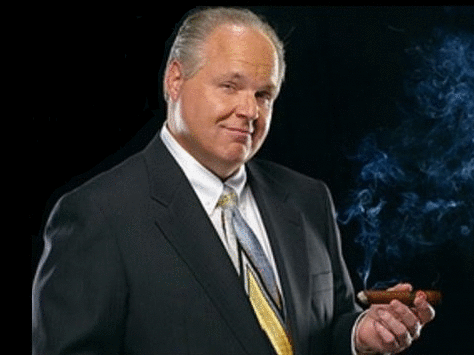
So, do I care about you health? Kind of. I mean, I don't wish strangers who don't do evil any ill. If You're fat and causing yourself harm, then I wish you'd get to a point where you're not damaging yourself Do I think fat is gross? It can be, but even that depends. I've never complained about a woman carrying an extra 20-30 lbs in her boobs and butt, that's for sure (I'll refrain from the too-easy excuse to post T&A. For now). From your photos and your description, I don't find your fat composition particularly attractive, that's for sure.
I doubt Smith is as fabulously wealthy as Rush but I'm guessing that she's not. Since she's not, I doubt that she pays all of her medical expenses out of pocket. In other words, she may have health insurance for that. That's the problem I have with her notion that her fat isn't anyone's business. If she has insurance, and she needs more medical attention for her obesity, then guess what? HER WEIGHT IS OTHER PEOPLE'S BUSINESS. Simply put, insurance is like a lottery: everyone pays in, a few draw out. If more people draw, more people have to pay. So, if bipedals of her ilk need more medical attention because they're fat then we all end up paying for that. The notion that fat and health do have relevance. We know that fat people are more unhealthy. The simple fact is they are usually more of a burden. So, we do have grounds to be pissed because fat people cost society money.
Once again, except Rush's. Rush pays for his lard, kitchen table to hospital visits to trips to the pharmacy (at least he paid for his Oxys instead of stealing them). If people like S.E Smith can't afford to do that then they better accept the fact that we're going to fat-judge. After all, your medical bills are making an impact in my life. Furthermore, as the government gets more involved, this will only accelerate. Just sayin'.
So, yes, you do have a right to be fat, much like you have a right to live your life as you see fit. There might be a good reason why right and responsibility alliterate: they're connected. If you're going to live fat, then you need to take full financial responsibility for being fat. If you can't pay like Rush pays, then maybe there's a lesson there. After all, your rights end where others begin and if you can't afford to pay for your medical bills, in full, then I guess you shouldn't be fat.
Saturday, December 7, 2013
Concluding, "The Fitness Industry is Dead"
While I've not really directly addressed many key points in this article and opted to say what I think are the reasons why the industry itself is dead in the sense its ineffective, I think that the article itself is great because it's a much needed sense of introspection for anyone involved in this subculture. There are no shortage of rants out there about why the McFitness industry sucks but not a whole lot of the root problems. This author had his thoughts well-laid out why things don't work. I don't agree and I have mine.
In the past two entries, I've identified my two, large problems: lack of good information and far-less than ideal people disseminating it. There is a third and final problem that I see with the industry and I've pondered this problem for quite some time how to word it properly: the people that the fitness industry is selling to. I wonder how this industry will continue to exist in the larger culture it's part of.
Oddly enough, my two favorite blogs to read about strength training are intensely different from one-another. The first is Chaos and Pain. The Second is Body Tribe. The latter does about a good of a job reaching out to the 85% discussed in the last entry as anyone in the subculture. The former generally could care less if they come along or fall off a cliff...their choice.
I can see the logic of both points of view and how neither will particularly work well to get people moving properly. While the inspiration of this article delves into the psychological aspects of how to get people physically right, I generally disregard such a direction. Yes, people have emotional issues that hold them back from being better movers. Still, people long ago had these issues and they didn't become diseased, eating-disordered sloths because they weren't happy. Clearly something has changed and that change is that people become this way because they can. I said it in the first entry and it probably explains most of why the fitness industry doesn't work: the larger culture sabotages it. Our societies give people the option to remain weak, lazy, dumb to the facts, and they don't have to listen to what us 15% say about getting moving. If you're reading this then chances are that you are the aforementioned 15% and you're here because you want to be here.
Let's face the grim reality: like I mentioned before, we've figured out how to live long and unhealthy. We've mastered drugs and surgery to the point were we can keep a body that should die from lack of proper function alive with our health care system. If you HAD no other choice but to lose the unhealthy weight and move in a manner that keeps your body strong and healthy then you'd do so. If the 20th century had a list of bad notions, near the top of that piece of paper would be the idea that if we moved less, we'd be happier. In theory, it sounded like a good idea if you consider that humankind spent most of the previous 10,000 years abusively laboring ourselves to death. Sitting down most of the time must have seemed like a pretty good idea circa 1900. It clearly wasn't.
What's also happened to people that makes getting them to accept fitness is another larger issue that we may have all noticed but not really been able to put into words. With things like this, we have to be open-minded to all sources of information so that we can find the right way to put this into words. I happened to find it while researching knife fighting on Youtube. Even if you have no interest in the subject, just scroll ahead to 12.10 and pay attention...
In the past two entries, I've identified my two, large problems: lack of good information and far-less than ideal people disseminating it. There is a third and final problem that I see with the industry and I've pondered this problem for quite some time how to word it properly: the people that the fitness industry is selling to. I wonder how this industry will continue to exist in the larger culture it's part of.
Oddly enough, my two favorite blogs to read about strength training are intensely different from one-another. The first is Chaos and Pain. The Second is Body Tribe. The latter does about a good of a job reaching out to the 85% discussed in the last entry as anyone in the subculture. The former generally could care less if they come along or fall off a cliff...their choice.
I can see the logic of both points of view and how neither will particularly work well to get people moving properly. While the inspiration of this article delves into the psychological aspects of how to get people physically right, I generally disregard such a direction. Yes, people have emotional issues that hold them back from being better movers. Still, people long ago had these issues and they didn't become diseased, eating-disordered sloths because they weren't happy. Clearly something has changed and that change is that people become this way because they can. I said it in the first entry and it probably explains most of why the fitness industry doesn't work: the larger culture sabotages it. Our societies give people the option to remain weak, lazy, dumb to the facts, and they don't have to listen to what us 15% say about getting moving. If you're reading this then chances are that you are the aforementioned 15% and you're here because you want to be here.
 |
| Am I the only one who despise that these were even thought up? |
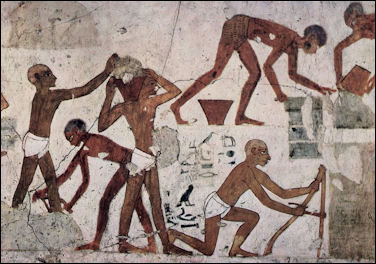 |
| Yeah, I bet they would have opted for a desk job too! |
What's also happened to people that makes getting them to accept fitness is another larger issue that we may have all noticed but not really been able to put into words. With things like this, we have to be open-minded to all sources of information so that we can find the right way to put this into words. I happened to find it while researching knife fighting on Youtube. Even if you have no interest in the subject, just scroll ahead to 12.10 and pay attention...
Linking that sort of pervasive, cultural restlessness explains a lot of things wrong. So, our world largely relies on distraction from the problem at hand. That's probably why too many need some sort of constant feed of entertainment to get through the day. Relative to the discussion I've articulated, it explains why gyms these days just don't get things done.
Look at most modern gyms and you'll see a massive collection of machines and they all tell you how to move. You don't really have to think about the moves you want to do, how to set up your body posture properly, how to execute. All you have to do is sit a chair, adjust some padding, and let hinges dictate your movement pattern. While you're moving, they give you televisions and music to move to. The fitness industry has just continued to extrapolate on the lack of imagination and continues to feed the restlessness.
 |
| I may have identified a cause for that... |
I'd be willing to bet big money that promoting a break from that would net more results. Good work in a gym is time spent in our own world, deep in introspection, and often times being creative with what we're doing. If the fitness clubs as we know them are nothing more than another conformist distraction, then like every other chunk of bullshit entertainment, people won't stick by it for very long.
You could say that's the fault of the fitness industry itself. The industry as we know it in the USA had the misfortune of coming of age in the same time period where we really took getting fat and restless into double-overdrive. So, were they simply catering to a demand?
Personally, I just have a hard time buying it. I'm going to venture into the usually murky waters of personal experience. That can be troublesome since personal experience is too often devoid of objective introspection. People aren't known for looking at personal experience and saying, "I did that wrong", nearly as much as they should.
In my case, I tried the gym world when I was a teenager. I used Cybex machines and running stuff. I didn't stick with any of it. I wanted strength but I wasn't getting answers that I wanted. So, I went out and I looked for it. I didn't stop until I found it either. If people demanded the truth out of the fitness industry, someone would provide it. They wouldn't accept being stuck.
Of course, I don't expect the fitness industry to actually go the way of the buggy-making business just yet. I just don't expect it to suddenly become truly effective any time soon. These past three entries represent my reasoning as to why don't think it will. Ultimately, the first two won't get solved until the bigger problems with the society that the gym rat world inhabits gets repaired and demands better out of the business.
Friday, November 15, 2013
If You haven't thought go go narrow, you've failed. Here's why...
Dave Tate said it, I didn't. I'm no expert so theoretically, I have no credibility. After all, I'm just a modestly above-average strong 30-something with a humble blog and a handful of fans and I don't train people for a living. Tate's an expert for sure. He's so expert-ish that his presence, or absence, from T-Nation is a critical element of making that place a worthwhile place to gather information. It was there that he said something that I pretty much knew in the back of my mind without realizing it: powerlifting (and probably most other lifting in general, for that matter) is about shortening the distance you have to move a weight as much as possible to make the lift count as complete.
That's a kind of rule of thumb that I see a lot lately. Since August, I've needed to join a gym to get my broken body to a stationary bike as part of rehabbing my knee after my ACL reconstruction. This is, by far, the longest I've worked out in a gym in over 14 years. So, I've traded in my solitary training existence for spending more time in a gym. As a result, I've seen much more training styles first-hand than I have since my teenage years when I had less than a clue about what the fuck I was doing.
It was kind of like landing on Mars, as much for me as it was probably for them. They seemed as astonished that I would think to do close-grip pull-ups off of ropes as I was astonished about how few different ways they do pull-ups. The rope-thing was a novelty but what drew a lot of attention was doing close-grip pull-ups (oddly enough). Apparently this never entered anyone's mind.
Regardless of whether you're pulling or pushing with the upper body, the wider you spread your hands apart, the easier the pull or the push becomes. There's two reasons for this. The first is that spreading the hands wide de-emphasizes the smaller, weaker arm muscles in favor of the bigger muscles of the upper body. Then, there's the second reason that Dave Tate brought up and that as you spread the hands farther apart, the distance to complete the rep shortens up.
I'll use the handstand push-up as an example here... and a jack-in-the-box.
Here's a wide HSPU...


Like I said, this applies to Push-ups, Pull-ups, and rowing movements. What this information is useful for depends on what you want to do with it. It doesn't just have applications to moving as much weight as possible for the shortest possible distance. That approach works great if you've got lots of iron to play with. Maybe you do. Then again if you're reading this article then chances are you're like me: looking for ways to goose the most work out of a limited equipment supply. You can change the level of difficulty with one movement by just a simple change in hand placement. You can also change the focus of the movement from an upper body workout to a more arms-oriented one with this approach. This is how I use Handstand push-ups to strengthen my shoulders one day and my arms at a later point in the week.
Going for that extra ROM may pay off dividends may also pay off for that one other, pesky detail that too many people who like go get strong don't really want to think much about: their health. Since Dave Tate makes things more legitimate, I'll defer to his words yet again:
I hope that these ideas and concepts aren't new to my readers' minds. This shouldn't be most strength trainer's equivalent of the the discovery of Vulcanized Rubber (found by accident and never capitalized on by Charles Goodyear). If that's the case, then feel free to self-flagellate as needed. Otherwise, ditch any notions about getting creative, not giving as shit about your body, or caring about keeping your rep count high. Moving the hands closer together here and there is as simple as dropping rubber on a stove so do it more often.
That's a kind of rule of thumb that I see a lot lately. Since August, I've needed to join a gym to get my broken body to a stationary bike as part of rehabbing my knee after my ACL reconstruction. This is, by far, the longest I've worked out in a gym in over 14 years. So, I've traded in my solitary training existence for spending more time in a gym. As a result, I've seen much more training styles first-hand than I have since my teenage years when I had less than a clue about what the fuck I was doing.
It was kind of like landing on Mars, as much for me as it was probably for them. They seemed as astonished that I would think to do close-grip pull-ups off of ropes as I was astonished about how few different ways they do pull-ups. The rope-thing was a novelty but what drew a lot of attention was doing close-grip pull-ups (oddly enough). Apparently this never entered anyone's mind.
Regardless of whether you're pulling or pushing with the upper body, the wider you spread your hands apart, the easier the pull or the push becomes. There's two reasons for this. The first is that spreading the hands wide de-emphasizes the smaller, weaker arm muscles in favor of the bigger muscles of the upper body. Then, there's the second reason that Dave Tate brought up and that as you spread the hands farther apart, the distance to complete the rep shortens up.
I'll use the handstand push-up as an example here... and a jack-in-the-box.
Here's a wide HSPU...

Now, putting the hands almost under the shoulders...

Like I said, this applies to Push-ups, Pull-ups, and rowing movements. What this information is useful for depends on what you want to do with it. It doesn't just have applications to moving as much weight as possible for the shortest possible distance. That approach works great if you've got lots of iron to play with. Maybe you do. Then again if you're reading this article then chances are you're like me: looking for ways to goose the most work out of a limited equipment supply. You can change the level of difficulty with one movement by just a simple change in hand placement. You can also change the focus of the movement from an upper body workout to a more arms-oriented one with this approach. This is how I use Handstand push-ups to strengthen my shoulders one day and my arms at a later point in the week.
Going for that extra ROM may pay off dividends may also pay off for that one other, pesky detail that too many people who like go get strong don't really want to think much about: their health. Since Dave Tate makes things more legitimate, I'll defer to his words yet again:
Here's the deal. Powerlifting is about finding the shortest range of motion possible.[see?]
Look at the bench press. If your setup and arch is sound, it's a very short (albeit very safe) range of motion.
Bodybuilding, in the purest sense, is the opposite. The most effective movements generally take the muscles through the longest range of motion.
I realized that I hadn't done any full range of motion work for years, and if I were to regain my "functional mobility" this would be where to start.This isn't to say that I love bodybuilding but it goes to show that ROM is a use it or lose it proposition. Losing it will ultimately break you down. That close-handed HSPU variation easily slices the amount of reps I can do as opposed to the wider-stanced one. BW guys tend to look at their reps the same way that powerlifters look at their poundage: keep the number high. The consequences of that ego trip hurts after a while. Even Tate admitted that (Read the rest of the article, not to mention all of the others, for that matter).
I hope that these ideas and concepts aren't new to my readers' minds. This shouldn't be most strength trainer's equivalent of the the discovery of Vulcanized Rubber (found by accident and never capitalized on by Charles Goodyear). If that's the case, then feel free to self-flagellate as needed. Otherwise, ditch any notions about getting creative, not giving as shit about your body, or caring about keeping your rep count high. Moving the hands closer together here and there is as simple as dropping rubber on a stove so do it more often.
Sunday, November 10, 2013
The Fitness Industry is Dead 2.2
In the first installment of my reaction to rebooted Body's article, "The Health and Fitness Industry is Dead (and that includes you Paleo)," I took a contrary opinion that while there is good information out there not being acted on by the general public, there is a lot more really bad information being acted on by most of the general public. While getting good information out there is a key first step to making a viable health and fitness industry that actually succeeds at making people healthy and fit, it's just a bullet in a gun that's not being fired. Someone has to pull the trigger and get it out into the world.
The author makes one, key error in information delivery: he assumes that the information is being properly disseminated. I don't think it is, and I can see where he would think so. My friend Chip Conrad's comments on this article on Facebook is what brought it to my attention. His comment was eye-opening. Here is a piece of it:
Roughly 15% of our culture is involved in movement to some degree. That's 85% not doing much in the way of being physically human. Why the fitness industry is 'dead' is because there is little geared towards addressing the 85% successfully. The 15% talks, posts and tweets amongst ourselves quite well, but there isn't a strong outreach program to that 85%...
I get the impression that the author thinks that the 85% who watch the Biggest Loser, work out at YouFit-Golds-Planetfitness, and think their Nikes make or break their fitness levels know much about Weston A. Price, Paleo, Crossfit, Mark Sisson, or make a distinction between weightlifting and weight training. Sure, some of these terms are seeping into public gym knowledge but the 85% don't know what they're really all about. As far as I'm concerned, I agree that as part of that 15%, we don't do a great job with getting the word out to the other 85%.
The most obvious explanation involves ego and self-interests. Chip said it before too: we are kind of like an underground movement and we enjoy the fact that we're underground. There is certain amount of elitism that we all enjoy to varying degrees. I see it when I go to the gym. People congregate based on what they enjoy doing (general weight loss-fitness, powerlifters, pseudo-bodybuilders), not regularly interacting with one another. I've not had much contact with Crossfitters because I don't actively seek out Crossfitters. Crossfitters, in return, rarely visit my blog. The one time I can confirm that someone from RKC commented here it was to tell me that I couldn't properly snatch with an Ironmaster Kettlebell. We have our cliques and often times, that's exactly where we stay. Things clearly haven't changed much since high school for too much of the fitness world.
Then, when we do reach out, I see issues about the accessibility of style of strength training that's being put forth. Is it really something that people want to do? Is it something that they can do? As far as I'm concerned, no better example of this exists than bodybuilding. Of all of the competing strength training interests out there, no other has so happily embraced the extreme of their clique quite like they have. Author Randy Roach said it best: bodybuilding has come full-circle. 75 years ago, they were considered freaks. They fought their way into mainstream consciousness and acceptance only migrate back to freak show status. Lots of kids get into sports idolizing they way that their favorite athlete does what they do. Who really wants to look like this...
 Then there's yet another problem with the marketing. Simply put: things move in trends with the fitness industry. Crossfit may be approaching its raging peak of popularity right now. Eventually, they'll reach a point of saturation and they'll descend out of the limelight and into the realm of parody. It happened with aerobics, bodybuilding, etc. The problem with that is that people need to keep moving far longer than that. What kind of faith can the fitness industry instill in the aforementioned 85% when it keep changing it's collective mind about what the 85% needs to do to get fit?
That's the issue with how the health and fitness industry has shot itself in the foot for the past half-century. With the infighting and constant reliance on trends as part of their business models, they succeed in making themselves into a joke for the remaining 10.5 months after New Years wears off and the Superbowl sabotages everyone's good intentions. If the 85% are going to get fit and healthy, then the 15% has to come up with a way to get them eating right and moving properly for more than a couple of seasons. That is, if that's the priority for us here, and sometimes I question if we even REALLY care.
The author makes one, key error in information delivery: he assumes that the information is being properly disseminated. I don't think it is, and I can see where he would think so. My friend Chip Conrad's comments on this article on Facebook is what brought it to my attention. His comment was eye-opening. Here is a piece of it:
Roughly 15% of our culture is involved in movement to some degree. That's 85% not doing much in the way of being physically human. Why the fitness industry is 'dead' is because there is little geared towards addressing the 85% successfully. The 15% talks, posts and tweets amongst ourselves quite well, but there isn't a strong outreach program to that 85%...
I get the impression that the author thinks that the 85% who watch the Biggest Loser, work out at YouFit-Golds-Planetfitness, and think their Nikes make or break their fitness levels know much about Weston A. Price, Paleo, Crossfit, Mark Sisson, or make a distinction between weightlifting and weight training. Sure, some of these terms are seeping into public gym knowledge but the 85% don't know what they're really all about. As far as I'm concerned, I agree that as part of that 15%, we don't do a great job with getting the word out to the other 85%.
The most obvious explanation involves ego and self-interests. Chip said it before too: we are kind of like an underground movement and we enjoy the fact that we're underground. There is certain amount of elitism that we all enjoy to varying degrees. I see it when I go to the gym. People congregate based on what they enjoy doing (general weight loss-fitness, powerlifters, pseudo-bodybuilders), not regularly interacting with one another. I've not had much contact with Crossfitters because I don't actively seek out Crossfitters. Crossfitters, in return, rarely visit my blog. The one time I can confirm that someone from RKC commented here it was to tell me that I couldn't properly snatch with an Ironmaster Kettlebell. We have our cliques and often times, that's exactly where we stay. Things clearly haven't changed much since high school for too much of the fitness world.
Then, when we do reach out, I see issues about the accessibility of style of strength training that's being put forth. Is it really something that people want to do? Is it something that they can do? As far as I'm concerned, no better example of this exists than bodybuilding. Of all of the competing strength training interests out there, no other has so happily embraced the extreme of their clique quite like they have. Author Randy Roach said it best: bodybuilding has come full-circle. 75 years ago, they were considered freaks. They fought their way into mainstream consciousness and acceptance only migrate back to freak show status. Lots of kids get into sports idolizing they way that their favorite athlete does what they do. Who really wants to look like this...
 |
| Anyone want striations on their glutes? |
Then there's yet another problem with the marketing. Simply put: things move in trends with the fitness industry. Crossfit may be approaching its raging peak of popularity right now. Eventually, they'll reach a point of saturation and they'll descend out of the limelight and into the realm of parody. It happened with aerobics, bodybuilding, etc. The problem with that is that people need to keep moving far longer than that. What kind of faith can the fitness industry instill in the aforementioned 85% when it keep changing it's collective mind about what the 85% needs to do to get fit?  |
| You don't see either of these guys much anymore. Did Crossfit really think they were going to get people rushing to join with this kind of shit? |
While we're on the subject of trends, let's address the diet issue. There is no other example of where the health and fitness industry has squandered goodwill and public faith with schizophrenic-like changes in advice than when it comes to diet. Rather than admitting to the somewhat complicated nature of how the body either gains or looses fat, or gains muscle, the health and fitness industry has happily moves along with new diets that has the following narrative:- Guaranteed to do what they say it will do.
- No other will work.
- That the last one was wrong.
That's the issue with how the health and fitness industry has shot itself in the foot for the past half-century. With the infighting and constant reliance on trends as part of their business models, they succeed in making themselves into a joke for the remaining 10.5 months after New Years wears off and the Superbowl sabotages everyone's good intentions. If the 85% are going to get fit and healthy, then the 15% has to come up with a way to get them eating right and moving properly for more than a couple of seasons. That is, if that's the priority for us here, and sometimes I question if we even REALLY care.
Friday, November 8, 2013
How Simple Can It Be and Still Work?
Don't you love those questions where people ask, "deadlift vs squat?" Are you as mentally stimulated as I am when someone brings ups a question starting with, "if you could only do x exercises..?" Are you excited to answer questions about programming, sets and reps, etc? Do you eagerly await answering any kind of questions dealing with training percentages?
 Yeah, me too. Hypothetical questions are only remotely interesting when you are pondering things that you really can't do. Otherwise, they're a ridiculous and wasteful trip down rhetorical lane that you don't need to bother with. Squat vs. Deadlift? You can do them both, you know. In the same workout, even in the same move (Zercher lift, anyone?) Do you really need me to tell you how many times to do that? Do you realize how far into professional athletics you have to wander before percentages even become extremely relevant to your training? A better question still is do these people get exactly how much time they waste by their paralysis by analysis?
In the past half-decade, I've generally succeeded in not turning this blog into a reliable supply of rants and raving that most strength training blogs descend into so I don't plan on starting now. I also try to look what seems like wasted rhetoric and ask the question if there's something to these questions: a hidden call for help disguised as tomfoolery and general dumb-ass behavior. When I see most of the questions, I can't help but wonder if the real questioned being asked is, "How simple can I make training to obtain awesome?"
Most of us already know that the answer is, "surprisingly simple." For those of you who don't, allow me to elaborate on how simple this can be with one example: my pre ACL-tear upper body workout. It was pretty simple: handstand push-ups and Pull-ups (usually neutral grip, no particular reason why). As far as I'm concerned, there is no better yin to the pull-up's yang than the handstand push-up. They're practically the same motion except one is a pull and the other is a push. People smarter than myself have told me that this is a fantastic way to avoid muscle imbalances or tightness. Lastly, there is a lot of work to be done with both of these movements before you can file them away as excessively strengthy- endurancy.
Okay, so you can get lots of upper body strengthening with these two moves, practically covering all of the bases for the upper body musculature. Now what? Oh, yeah, only thing more annoying than the questions about narrowing down exercises: sets and reps. Numbers and training percentages conversations make my mind go blank and get sleepy faster than excessive whiskey consumption. I do have a favorite way to arrange these movements though, and I blogged about it too briefly once before: superset pyramids. I've been an upper body push-pull superset junkie for years. I decided to merge in pyramid work simply because there are so many good things going on all in this style of rep scheme.
3-6-9-12-15-18-21-18-15-12-9-6-3
Did I get results? Sadly, as always, I'm terrible with tracking progress with pictures. At the beginning of the year, I resolved to plunge back into mass gaining. I had hoped to take myself from the dismally-low 172 lbs (stress is a bitch) up to a more acceptable (to me) 200 lbs. Doing this workout Mondays and Fridays I jumped up to 185 lbs by the time I tore my ACL. So, this part of the plan was working out just fine. Next year, I suppose...
So, it really can be as simple as choosing the right two movements and a well thought out rep scheme. Good planning and complicated/complex planning are not the same thing. All you have to do to is quit ruminating over what to do on the internet, pick your poison, and attack it with some seriousness and intensity.

In the past half-decade, I've generally succeeded in not turning this blog into a reliable supply of rants and raving that most strength training blogs descend into so I don't plan on starting now. I also try to look what seems like wasted rhetoric and ask the question if there's something to these questions: a hidden call for help disguised as tomfoolery and general dumb-ass behavior. When I see most of the questions, I can't help but wonder if the real questioned being asked is, "How simple can I make training to obtain awesome?"
 |
| I can't even begin to tell you how happy I am that I can do these again! |
 |
| Maybe I resorted doing these because the handles just kind of stick out there. It's still a good pull-up variation |
- the beginning is warm-up
- You eventually get to a max set of reps
- the descent is drop setting
- It can increase your total reps
- It's also a great way to get a shitload of volume
3-6-9-12-15-18-21-18-15-12-9-6-3
(that would be 147 reps of both HSPU's and Pullups)
Did I get results? Sadly, as always, I'm terrible with tracking progress with pictures. At the beginning of the year, I resolved to plunge back into mass gaining. I had hoped to take myself from the dismally-low 172 lbs (stress is a bitch) up to a more acceptable (to me) 200 lbs. Doing this workout Mondays and Fridays I jumped up to 185 lbs by the time I tore my ACL. So, this part of the plan was working out just fine. Next year, I suppose...
So, it really can be as simple as choosing the right two movements and a well thought out rep scheme. Good planning and complicated/complex planning are not the same thing. All you have to do to is quit ruminating over what to do on the internet, pick your poison, and attack it with some seriousness and intensity.
Monday, November 4, 2013
Eat Organs and Reverse Your Push-ups
As much as I find strength training interesting, I'm not always interested in talking about it with other people. Originality in the world of weights may have died a long time ago but that doesn't give everyone a reason to have the same four or five reasons for lifting weights, getting their routines from a cultish mothership web site, or doing anything resembling a fitness class. I enjoy being at least a little bit different and I have a severe aversion to following other people's programs.
While I could care less about taking other people's marching orders, I do spend some time reading what other people are up to and using my blog to react to what I see out there. As luck would have it, life has dropped two interesting ideas in my lap that I felt compelled to share with the world.
Reversed-Hand Push-ups
I've seen these around for years, tried them once or twice, and then discarded them. They were the wrong combination of not particularly challenging and uncomfortable on my wrists and elbows. In other words, they were just nothing more than another piece of high-rep nonsense that plagues BW training. That is until I read this article about reverse-grip bench pressing. For some reason, I wondered if I could use a couple of the cues given in a reverse grip push-up. So, using a seam in my driveway as a guide, I set my hands up so the seam passed diagonally through my hands, much like the bar does in the picture below with my hands just past shoulder width and about the same point as my solar plexus.

While this was more comfortable than previous attempts at reverse grip push-ups, it still wasn't very challenging. So, I decided some more weight was in the order. I opted to throw one of my sandbags (about 50 lbs) around my neck and upper back. Now, I was onto something. I enjoyed the weighted reverse hand push-up immensely, doing 15-20 reps per set.

It definitely solicits gets more pectoral recruitment. Try this right now: put your hands straight out in front of you like you're pushing someone. Now, turn your hands upside down. Notice the difference in the contraction of your pecs? There's also no forgetting about using the Lats when pushing-up. Like the reverse grip bench, this reverse hand push-up is also easier on the shoulders. That may be due to that increase in lat contraction that you felt when you turned your hands upside down. It also gives the biceps more eccentric contraction work too. It seems to dovetail nicely with my standing overhead press work...when I could do standing overhead press work.

Eating Organs
One thing that didn't change for nearly a millennia was the rich and affluent had a bad habit of eschewing healthier, more nutrition dense foods. They, in turn, ate the junk food. The Romans grew rye but the rich and royal favored wheat and left the more nutritionally-sound rye to the poor people. Those were the same old days where they killed an animal they ate everything but the squeal. So, it strikes me as odd that when we fast-forward to the 21st century, I had to go to a Yelp-$$ (barely, I can't get out of El Gaucho Inca without spending $100 for two people) restaurant to eat calf thymus glands and pancreas (aka sweetbreads) .
 Yeah, that's a mistake that we don't eat organ meat like our ancestors did because, generally-speaking, offal is more protein-dense than muscle meats. That's just the start. After I fell in love with sweetbreads, I stumbled across this article on T-Nation. Who knew that organ meat could have that kind of micronutrient content? Most organ meats totally kick muscle meats ass in micronutrient content. That's why there are cultures that can subsist on almost nothing else but meat and not suffer the diseases that we associate with not eating enough fruits and vegetables. If you think about it, that all make sense. Most micronutrients are supporting some kind of organ function. So, it only makes sense that they're concentrated more in the organs than in the muscles.
Maybe Jack Lalanne, Joe Gold and Armand Tanny were on to something when they would raid slaughterhouses looking for cows blood to drink. Yeah, I've also ate cow's blood (in blood sausage). If you care to take a break from looking up porn or celebrity gossip, check out the protein content, and the price, of cows blood. I doubt you'll find a cheaper protein out there. I'm even a fan of the Scottish dish known as Haggis. If burly men who invented throwing telephone poles for fun eat it with pride then maybe there's a lesson for the rest of us to learn.
So, sweetbreads are awesome. I'm not the fan of liver that TC Louma is. If you want an organ meat that has a similar texture to the muscle-meat you're used to then try heart (just don't cook it past medium). Best of all, these nutrition powerhouses (are you sick of that phrase yet?) are cheap since they're barely considered good enough for dog food by some people's standards. Their loss.
If you've ever driven in a crowded parking lot and pondered why people follow the next five cars in front of them, knowing they won't get the first available spot then you've got an idea of how I feel about our subculture. Yeah, we all move in between the same lines and we all want to arrive at a good spot but we don't need to follow everyone else to get there. We can take a turn away from where everyone else is going. Who knows, we might even find what we're looking for quicker. In other words, we don't all need to bench press and subsist on chicken breast and protein powder.
While I could care less about taking other people's marching orders, I do spend some time reading what other people are up to and using my blog to react to what I see out there. As luck would have it, life has dropped two interesting ideas in my lap that I felt compelled to share with the world.
Reversed-Hand Push-ups
I've seen these around for years, tried them once or twice, and then discarded them. They were the wrong combination of not particularly challenging and uncomfortable on my wrists and elbows. In other words, they were just nothing more than another piece of high-rep nonsense that plagues BW training. That is until I read this article about reverse-grip bench pressing. For some reason, I wondered if I could use a couple of the cues given in a reverse grip push-up. So, using a seam in my driveway as a guide, I set my hands up so the seam passed diagonally through my hands, much like the bar does in the picture below with my hands just past shoulder width and about the same point as my solar plexus.

While this was more comfortable than previous attempts at reverse grip push-ups, it still wasn't very challenging. So, I decided some more weight was in the order. I opted to throw one of my sandbags (about 50 lbs) around my neck and upper back. Now, I was onto something. I enjoyed the weighted reverse hand push-up immensely, doing 15-20 reps per set.

It definitely solicits gets more pectoral recruitment. Try this right now: put your hands straight out in front of you like you're pushing someone. Now, turn your hands upside down. Notice the difference in the contraction of your pecs? There's also no forgetting about using the Lats when pushing-up. Like the reverse grip bench, this reverse hand push-up is also easier on the shoulders. That may be due to that increase in lat contraction that you felt when you turned your hands upside down. It also gives the biceps more eccentric contraction work too. It seems to dovetail nicely with my standing overhead press work...when I could do standing overhead press work.
Eating Organs
One thing that didn't change for nearly a millennia was the rich and affluent had a bad habit of eschewing healthier, more nutrition dense foods. They, in turn, ate the junk food. The Romans grew rye but the rich and royal favored wheat and left the more nutritionally-sound rye to the poor people. Those were the same old days where they killed an animal they ate everything but the squeal. So, it strikes me as odd that when we fast-forward to the 21st century, I had to go to a Yelp-$$ (barely, I can't get out of El Gaucho Inca without spending $100 for two people) restaurant to eat calf thymus glands and pancreas (aka sweetbreads) .
Maybe Jack Lalanne, Joe Gold and Armand Tanny were on to something when they would raid slaughterhouses looking for cows blood to drink. Yeah, I've also ate cow's blood (in blood sausage). If you care to take a break from looking up porn or celebrity gossip, check out the protein content, and the price, of cows blood. I doubt you'll find a cheaper protein out there. I'm even a fan of the Scottish dish known as Haggis. If burly men who invented throwing telephone poles for fun eat it with pride then maybe there's a lesson for the rest of us to learn.
So, sweetbreads are awesome. I'm not the fan of liver that TC Louma is. If you want an organ meat that has a similar texture to the muscle-meat you're used to then try heart (just don't cook it past medium). Best of all, these nutrition powerhouses (are you sick of that phrase yet?) are cheap since they're barely considered good enough for dog food by some people's standards. Their loss.
 |
| Anticuchos: Grilled beef heart. That green sauce kicks ass too! |
A special thanks to my lovely wife, Melissa,
for the gracious help with the video and photography!
Subscribe to:
Posts (Atom)


